Get the latest on Elon Musk’s Bitcoin holdings. Read about on-chain data on Tesla and SpaceX crypto balances and Musk’s personal stance on digital assets.

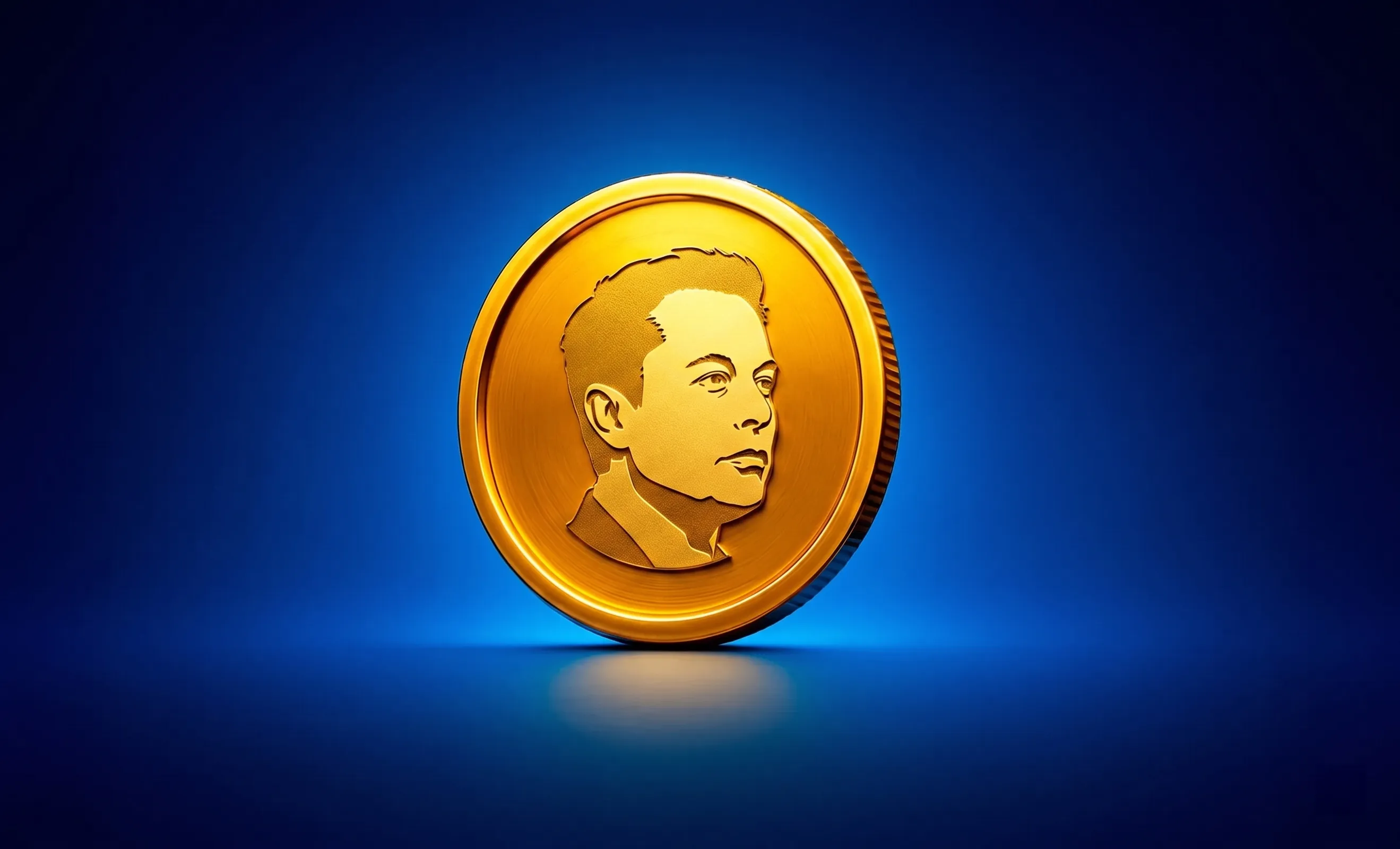
Elon Musk’s personal Bitcoin (BTC) holdings aren’t publicly disclosed in exact figures. His relationship with BTC can be defined by a clear divide between his vocal personal support and the regulated financial disclosures of his companies.
With a ‘HODL’ philosophy, his primary institutional footprint remains in BTC, which serves as a core treasury asset for both Tesla and SpaceX.
During the 2021 ‘The B-Word’ conference, Musk publicly identified as a BTC ‘holder’, alongside ownership of ETH and DOGE. However, unlike public corporations, he isn’t required to file detailed personal audits of his private wallets.
While he famously joked in 2018 that he only owned 0.25 BTC sent by a friend, he has since indicated that his personal holdings are more substantial, though he has never released a specific on-chain address or total.
Musk continues to describe BTC primarily as a ‘digital gold’ and a hedge against inflation rather than an asset he frequently trades. His advocacy for DOGE — to the extent of calling himself the ‘Dogefather’ — remains a centerpiece of his public persona as he highlights its transaction efficiency over BTC for everyday use.
Tesla’s BTC holdings are tracked through mandatory SEC filings. Following an accounting overhaul in 2025, Tesla began reporting its digital assets at fair market value. This means the company would record gains and losses in real-time, providing a more transparent view of how BTC impacts Tesla's transition from a car manufacturer to a physical AI entity.
As per the Q1 2026 production and delivery report, Tesla’s BTC position has remained steady following its high-profile liquidation of 75% of its holdings in 2022. In early 2026, the company reported a balance of approximately 11,509 BTC, making it the fourth-largest global corporate holder of BTC.
Beyond Tesla, Musk's aerospace firm SpaceX represents a large-scale, restructured crypto-adjacent holding. In February 2026, SpaceX acquired Musk's AI startup, xAI, in an all-stock transaction that valued the combined entity at $1.25 trillion.
Period | Event / status | Reporting method | Estimated balance |
Q1 2021 | Initial $1.5B purchase | Historical cost | ~43,200 BTC |
Q2 2022 | 75% liquidation ($936M) | Historical cost | ~10,800 BTC |
Q1 2026 | ‘HODL’ strategy | Fair market value | 11,509 BTC |
As a private company, SpaceX isn’t subject to the same SEC disclosure rules as Tesla, meaning its BTC holdings are verified through voluntary confirmations and on-chain analytics. During the 2021 conference circuit, Musk also confirmed that SpaceX held BTC on its balance sheet, though the company has never released an official audit of these assets.
Industry estimates for early 2026 place SpaceX's reserves at roughly 8,285 BTC. Analysts refer to the company’s anticipated 2026 IPO – which is seeking valuations of over $1.75 trillion – as a catalyst for further transparency. While on-chain firms have identified wallet clusters that match SpaceX’s known financial flows, these figures are treated as high-probability estimates rather than absolute certainties.
Elon Musk’s influence on the market has evolved from retail-driven hype to a more complex institutional signal. In 2026, his decisions regarding corporate treasuries are viewed as a barometer for how tech-centric firms manage capital in an era of physical AI and autonomous systems.
Musk's public comments on the environmental impact of mining or network scalability have historically triggered rapid price fluctuations.
As the most influential tech figures aren’t spared from regulated reporting standards, your own security depends on the same commitment to verified data and personal custody.
Join the transition toward a more transparent financial future:
Does Elon Musk still own Dogecoin?
Yes. Musk has repeatedly confirmed his personal ownership of Dogecoin and continues to be its most prominent advocate.
Can you buy a Tesla with Bitcoin?
No. While Tesla briefly accepted BTC in 2021, the option was retracted and hasn’t been reinstated as of April 2026. However, Tesla currently accepts DOGE for select products in its online shop.
Does Elon Musk use crypto for his businesses?
While Musk has transitioned away from accepting Bitcoin for vehicle purchases, he has integrated digital assets into other areas of his corporate ecosystem. Tesla allows customers to purchase select merchandise from its online shop using Dogecoin. Additionally, Musk’s aerospace firm, SpaceX, once accepted Dogecoin as full payment for the ‘DOGE-1 Mission to the Moon’, a lunar satellite launch.
Has Elon Musk ever sold his personal Bitcoin?
Musk has stated that he doesn’t sell his personal BTC, though he has acknowledged that his companies (Tesla and SpaceX) may trade or sell theirs based on corporate liquidity needs.
Important information:
This article is for informational purposes only and should not be construed as financial or investment advice. Trading cryptocurrencies involves risks, including price volatility and market risk. Past performance may not indicate future results. There is no assurance of future profitability. Before deciding to trade cryptocurrencies, consider your risk tolerance.
Services, features, and other benefits referenced in this article may be subject to eligibility requirements and may not be available in all markets. They may also be subject to change at the discretion of Crypto.com.