The pack is open and you’re taking a closer look at your One Piece cards. Which pulls deserve a second glance? Explore our One Piece rarity guide to understand the symbols on your cards and spot the differences between rare and common collectibles.

Once Piece cards’ rarity labels are in the lower right corner of the card. It sits beside the set code and card number. Take ST01-001 as an example and read it in four steps:
Other games use different marks. Pokémon rarity symbols, for example, are circles, diamonds and stars rather than letters.
One Piece card rarities run from Common to Secret Rare, and Leader cards carry their own label. Each label comes with a typical finish, so you can check the printed letters against how the card looks.
Recommended read: How to check what your Once Piece cards are worth
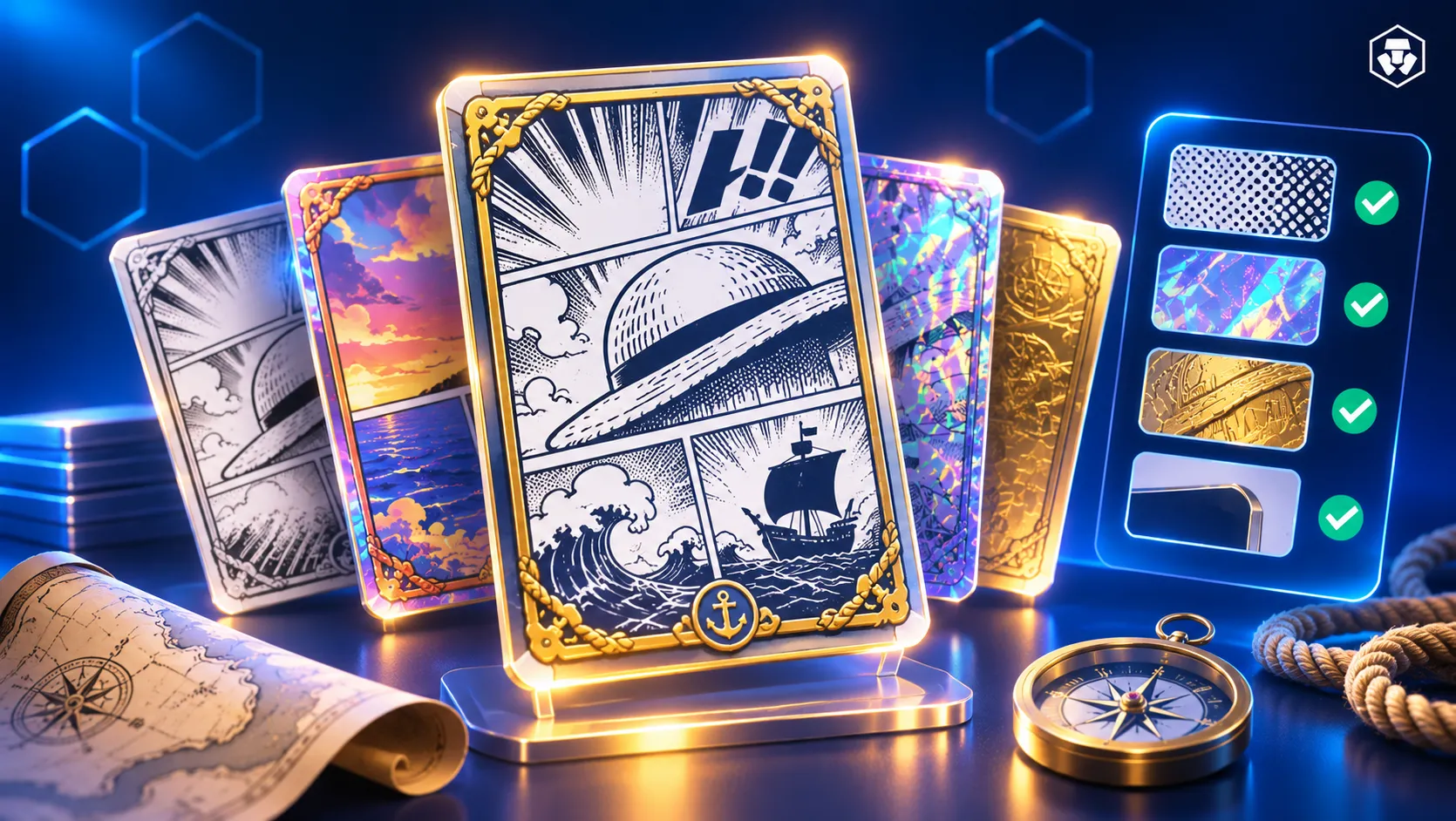
Alt art cards are versions of an existing card with different artwork. The art may cover the whole card, shine or have a textured finish. A star above the rarity label marks Alt-Art and Manga Alt-Art cards. Japanese toymaker Bandai also listsTreasure Rare and DON!! cards alongside the main tiers.
The labels printed on cards and the terms on Bandai's set pages are the only official terms. Catalogs and marketplaces vary in the shorthand they use, so check the printed label and the artwork before you rely on a listing's name.
No, rarity shows a card's printed tier. Price depends on the exact card, its version, language, condition and what buyers pay. PSA notes that rarity can outweigh character popularity and that popularity can outweigh rarity.
To check a card's value, compare completed sales of the same version rather than asking prices.
Pull rates are a separate question. Figures online are usually collectors' counts from opened packs, so treat them as estimates. Some of the highest reported sales are tournament prize cards that no pack contains.
Combine four details: the set code and number, the rarity label, the artwork and the language. One card number can cover several versions, so the number alone isn't enough.
If the number matches but the artwork doesn't, compare the card with Bandai's official card list. A home check can't confirm a card is genuine or predict its grade. Grading companies such as PSA authenticate cards and then grade their condition.
Online card ripping lets you open trading card packs on a screen instead of tearing a foil wrapper. What you reveal can be a virtual card or a real collectible, depending on the platform.
Platforms usually fall into three formats:
After a reveal on a physical-backed platform, you may be able to request delivery, keep the card in a vault or accept a buyback offer. A buyback offer can be lower than the card's estimated resale value. Published odds are helpful, but they don't guarantee the platform follows them.
With Crypto.com Rips, you can open a digital pack in the Crypto.com App to reveal a card backed by physical inventory. After the reveal, you can sell the card back to your fiat wallet at a quoted price, request physical delivery or hold it for up to two days. If you don't act within 48 hours, the card sells automatically at the quoted price.
Card collectibles have taken off as hobbyists and first-timers alike amass their collections or flip it for gains.
Try your hand at the Rips experience and get 5 online card packs free of charge. Find out more details.
Four steps cover the path from account to your first reveal:
The main One Piece card rarities are Common (C), Uncommon (UC), Rare (R), Super Rare (SR) and Secret Rare (SEC). Leader cards carry their own L label. Promo cards and DON!! cards fall outside this list.
The rarity label sits in the lower right corner of a One Piece card, beside the set code and card number.
Among the standard labels, Secret Rare (SEC) is the scarcest, according to PSA. It also describes Manga Alt-Art cards as the rarest cards pulled from packs.
PSA says a star above the rarity label marks Alt-Art and Manga Alt-Art cards. These are versions of an existing card with different artwork.
Collectors often say 'manga rare' for what Bandai calls a Super Alt-Art card. Bandai describes it as an Alt-Art card covered with designs from the One Piece manga.
L stands for Leader. According to PSA, Leader cards have a red card back and the word "Leader" above the character's name.
No, a One Piece card's rarity label shows its printed tier, while its price depends on the exact card, version, language, condition and what buyers pay. PSA notes that character popularity can outweigh rarity.
Most One Piece cards are printed in both English and Japanese, and set codes are typically identical across the two. Some cards are printed in only one language.
The printed label on the card is the starting point for any one piece tcg rarity guide. Bandai also publishes an official English card list that you can compare a card against.
Important information: This article is for informational purposes only and should not be construed as financial or investment advice. The Crypto.com Rips service is provided by Foris Inc. subject to the Crypto.com Rips Terms and Conditions, eligibility, and jurisdictional limits. You must be 18+.