

Market
Cardano
Buy
Sell
One time
AUD
ADA
≈
34.4467
ADA
$50
$150
$500
Pay with
Google Pay
Apple Pay

USD Account
1-2 business days • No fees
Credit/debit card
Instant •
2.99%
0% fee first 30 days
Market
Cardano
Buy
Sell
One time
AUD
ADA
≈
34.4467
ADA
$50
$150
$500
Pay with
Google Pay
Apple Pay
USD Account
1-2 business days • No fees
Credit/debit card
Instant •
2.99%
0% fee first 30 days
Cardano FAQ
| Time | Price | Change |
|---|---|---|
| Today | 0.00% | |
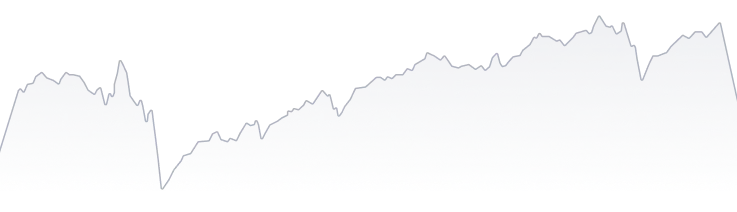
| 1 day | +$0.00089 (0.13%) | |
| 1 week | -$0.02 (6.26%) | |
| 1 month | -$0.08 (20.53%) | |
| 1 year | -$0.67 (69.70%) |
Market cap.
$10.69B
Rank
#18
24H volume
$288.93M
Circulating supply
36.81B ADA
82% of total
All-time high
$4.12
-1317.96%
All-time low
$0.03
90.30%
Total Supply
44.99B ADA
Max. supply
45B ADA
Explorers
View
Whitepaper
View
Website
View
Source Code
View
Markets
View
Sustainability Disclosure
View
ADA
$0.2903
-0.54%
Cardano is a decentralized, public blockchain and cryptocurrency project that is fully open-source. It is the first blockchain platform to be developed from a scientific philosophy and a research-driven, peer-reviewed approach. Cardano is building a smart contract platform that aims to enable secure and scalable transfers of value. The network uses a democratic governance system that allows it to evolve over time and sustain itself through a treasury system. This design also allows for upgrades through soft forks, ensuring the project can adapt and evolve.
Cardano was founded in 2015 by Charles Hoskinson, a co-founder of Ethereum. His goal was to create a "more balanced and sustainable ecosystem" for cryptocurrencies. The project is supported by three entities: IOHK (Input Output Hong Kong), the Cardano Foundation, and Emurgo. Cardano is often described as a "third-generation" blockchain, building upon the foundations of Bitcoin (first-generation) and Ethereum (second-generation). The network is named after the Italian Renaissance mathematician Gerolamo Cardano, while its native cryptocurrency, ADA, is named after Ada Lovelace, a 19th-century mathematician often regarded as the first computer programmer.
Cardano uses a unique Proof of Stake (PoS) system called Ouroboros, which is the first peer-reviewed, verifiably-secure PoS protocol. The protocol is built on the highly secure Haskell programming language. Cardano's architecture is a multi-layered protocol designed to be flexible and scalable. It has a settlement layer for transacting and a separate control layer for executing smart contracts. This layered approach allows the protocol to perform advanced functions while also allowing for future upgrades.
The native cryptocurrency on the Cardano blockchain is ADA. ADA holders can use the token to transfer money and pay for goods and services. It is also the native token used for applications built on the Cardano blockchain. Furthermore, ADA is used for staking, where holders can delegate their tokens to stake pools to help validate transactions and secure the network in exchange for rewards. ADA is also integral to the project's decentralized governance system, allowing token holders to vote on proposals for the network's development.

CARDANO - What Price Can ADA Hit by 2029?! My Honest Thoughts! Will ADA Surprise?
Youtube Video
19 hrs ago

Earn up to 2.5% p.a. with regular payouts
Make investing stress-free

Trade with deep liquidity and low fees