Learn how Federal Reserve rate hikes, cuts and guidance impact crypto prices. Explore key mechanisms, past examples and what to expect at future Fed meetings.

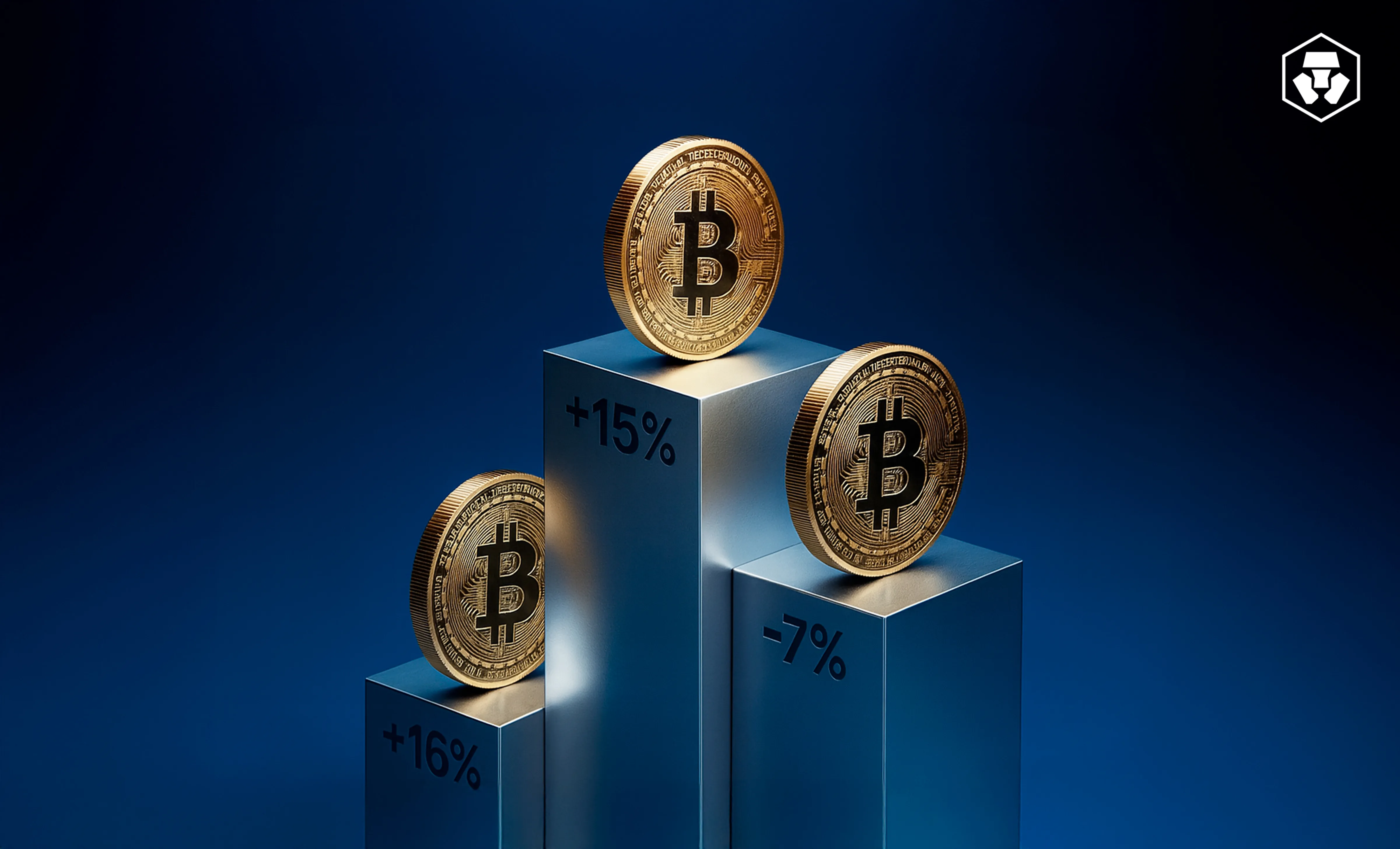
The US Federal Reserve (Fed) holds sway over global markets, including cryptocurrency. Every time the Fed meets to adjust its benchmark interest rate, it sends ripples through financial systems, investor sentiment and asset prices.
The federal funds rate is the interest rate at which US banks lend reserves to each other overnight. It sets the tone for borrowing costs throughout the economy, from mortgages and car loans to business credit.
The Federal Open Market Committee (FOMC) meets eight times a year to set a target range for this rate. If inflation is running hot or the economy is overheating, the Fed may raise rates to cool things down. If growth is weak, it may cut rates to stimulate demand.
To enforce these targets, the Fed uses:
Interest rates can influence crypto in four major ways:
When interest rates rise, future profits and growth look less attractive in present-value terms. Crypto, like tech stocks, can be valued based on its long-term potential. Higher rates mean lower valuations.
Crypto thrives in easy-money environments. When borrowing is cheap, investors are more likely to speculate. When rates rise, borrowing gets expensive and liquidity dries up.
Higher US interest rates often strengthen the dollar, making dollar-denominated crypto like Bitcoin more expensive for global investors. Capital may also flow out of emerging markets and into US assets.
When risk-free yields (e.g. on Treasury bills or high-yield savings) are low, crypto becomes attractive. When yields rise, investors may prefer safer income over volatile assets.
When COVID hit, the Fed slashed rates to near-zero and began massive QE. Bitcoin fell briefly but rebounded fast. Liquidity surged and risk appetite soared. BTC went from about $5,000 in March 2020 to about $29,000 by year-end.
In response to surging inflation, the Fed raised rates aggressively and started QT. Crypto markets contracted. BTC dropped from $47,000 in March to $16,000 by year-end. Liquidity vanished and confidence was shaken by events like the unfolding of Terra and FTX.
By mid-2023, the Fed paused hikes. Rate cuts began in late 2024. BTC recovered to $30,000 as markets anticipated easier conditions. But reactions were mixed; some risk-on behavior returned, while cautious macro signals capped gains.
A rate hike is generally seen as a tightening of financial conditions. It signals that the Fed is trying to slow down inflation or prevent the economy from overheating. For crypto, it may lead to short-term bearish sentiments:
In such environments, crypto prices tend to dip, especially when rate hikes come faster or steeper than markets expect.
A rate cut typically makes borrowing cheaper and stimulates spending and investment. For crypto, which thrives in high-liquidity, high-risk environments, this is usually a bullish signal:
But it’s not always straightforward. If a rate cut is seen as a reaction to a worsening economy, crypto may sell off alongside stocks as risk sentiment deteriorates.
A pause or pivot occurs when the Fed stops raising rates and hints at potential cuts. These moments are closely watched:
‘Higher for longer’ | This phrase means the Fed plans to keep interest rates elevated for an extended period, even if inflation falls. For crypto, it implies tighter liquidity and more muted price action. |
‘Fed pivot’ | This refers to a shift from rate hikes to rate cuts. Markets may rally on hints of a pivot, expecting easier conditions ahead. |
‘Terminal rate’ | The peak interest rate in a given cycle. Once the terminal rate is reached, markets begin to price at the end of tightening and the potential start of easing. |
In most cases, the market’s reaction usually depends not only on the Fed’s actual decision but also on how that decision aligns or conflicts with prior expectations.
As interest rates shift, generally so do market trends. Discover, buy or monitor top cryptocurrencies securely and easily on Crypto.com.
It might seem logical: when the Fed hikes rates, crypto prices should fall; when it cuts, they should rise. Yet, what actually happens can sometimes defy conventional thinking.
Markets are generally forward-looking. If traders widely expect a rate hike or cut, they may adjust their positions before the Fed’s official announcement. As a result, the actual move may trigger little reaction or even a counterintuitive one.
Example: In early 2023, Bitcoin rose in anticipation of a Fed pause. When the pause finally occurred, the price dipped slightly as investors took profits, illustrating a classic ‘buy the rumor, sell the news’ scenario.
Crypto doesn't operate in a vacuum. Other forces like inflation data, labor market reports, geopolitical events or a looming recession may dominate market sentiment. In such cases, even a dovish Fed move might not lift prices if broader fears persist.
If the Fed cuts rates due to recession risks, crypto may fall alongside equities as investors flee to safety. In this context, a rate cut becomes a red flag, not a green light.
The crypto market has its own drivers that can overpower Fed policy. Exchange collapses (e.g., FTX), security breaches, major regulatory crackdowns and game-changing innovations (like ETF approvals or protocol upgrades) can trigger reactions that diverge from macro expectations.
Case in point: Bitcoin’s steep drop in late 2022 was influenced more by the collapse of Terra and FTX than by rate hikes alone.
Crypto market structure matters. Thin order books, limited institutional depth and high retail dominance can all amplify price swings or distort macro correlations. In extreme cases, poor liquidity can lead to sharp moves irrespective of macro signals.
Sometimes, the narrative takes precedence over fundamentals. A strong meme, tweet or influencer comment can override economic logic, especially in bull or bear markets where emotion runs high. This narrative fluidity means the same Fed decision could have opposite effects depending on the prevailing mood.
Every Fed meeting is a macro event that crypto traders prepare for with the same intensity as equity, bond and FX desks. The Fed’s decision is only one piece of the puzzle; the real insight comes from the clues the central bank leaves about the future path of interest rates, liquidity and economic health.
Each component helps traders gauge how risk appetite may shift.
Released quarterly, the dot plot shows where each FOMC member expects interest rates to be in the coming years.
The SEP outlines forecasts for inflation, GDP growth and unemployment.
Even during a rate hike, a dovish SEP can send crypto higher if it suggests inflation is easing and cuts are approaching.
Real yields reflect the inflation-adjusted returns on government bonds.
Bitcoin’s price has historically shown a strong inverse relationship with real yields; falling real yields may align with bullish crypto phases.
CPI and PCE data released before and after each Fed meeting can shape expectations.
The DXY measures the strength of the USD relative to other currencies.
In many macro stress periods, Bitcoin behaves like an inverse-USD asset.
The 10-year yield reflects expectations around long-term growth, inflation and financial conditions.
The size and direction of the Fed’s balance sheet may be a direct measure of liquidity.
Note: You may track some of these metrics in the Crypto.com App and Research section.
Scenario 1: Fed resumes hiking (hawkish) | - Crypto likely retreats - Liquidity tightens - USD strengthens |
Scenario 2: Fed holds steady (neutral) | - Crypto may consolidate - Risk assets range-bound - Traders look for forward guidance |
Scenario 3: Fed cuts rates sharply (dovish) | - Crypto rallies - Liquidity improves - Yield-seeking resumes |
Note: Reactions depend on inflation data, economic health and global conditions.
As interest rates shift, so do market trends. Discover, buy or monitor top cryptocurrencies safely and easily on Crypto.com.
Ready to navigate the next Fed cycle? Stay informed as markets react to interest rate decisions and economic data. In the Crypto.com App, you can:
Important information: This article is for informational and educational purposes only. It does not constitute financial or investment advice. All forecasting methods, scenarios, and examples are illustrative and subject to market uncertainty. It is essential to do research and due diligence to make the best possible judgment, as any purchases shall be your sole responsibility. Trading cryptocurrencies carries risks, such as price volatility and market risks. Before deciding to trade cryptocurrencies, consider your risk appetite. You can find more information on the risks involved with trading or holding crypto-assets here.
Does crypto go up when Fed rates fall?
Most of the time, yes, but only if markets view the cuts as growth-positive rather than alarming. If cuts reflect easing inflation or improving financial conditions, liquidity expands and crypto may rally. If cuts hint at economic stress, crypto may fall alongside equities as investors shift to safety.
Why does Bitcoin act like a tech stock?
Bitcoin behaves like a long-duration, high-volatility asset whose value depends heavily on future expectations and liquidity. Just like growth-oriented tech stocks, BTC tends to rise when financial conditions loosen and fall when borrowing costs rise. This makes it extremely sensitive to macro sentiment and risk appetite.
What if the Fed cuts but crypto drops?
A falling crypto market following a rate cut usually means the cut was interpreted as a warning sign. Surprise cuts can imply recession risks, deflationary pressures or financial instability. In these scenarios, risk assets – including crypto – may decline even as policy technically becomes more accommodative.
What’s the link between the dollar and crypto?
Crypto often trades inversely to the US dollar. A strong dollar increases foreign investors’ cost of buying BTC and draws capital into USD-yielding instruments like Treasuries. A weaker dollar can push investors toward alternative assets, including crypto, in search of higher returns or diversification.
Are interest rates the most important macro factor for crypto?
They’re one of the major forces influencing liquidity, valuations and investor behavior. However, regulation, institutional adoption, technological upgrades, market structure and global risk sentiment can override rate effects. Crypto is macro-sensitive, but not macro-determined.
Does crypto always follow rate expectations exactly?
No. Crypto can diverge sharply when internal events like exchange failures, protocol upgrades or regulatory actions override the macro backdrop. Even if rate expectations shift, market-specific shocks can dominate price action.
How does the ‘higher for longer’ narrative affect crypto?
If markets expect interest rates to stay elevated for an extended period, liquidity remains tight, discount rates stay high and risk appetite weakens. This narrative can lead to capped rallies, prolonged consolidation or slower recoveries in crypto.
Why does crypto react so strongly to Fed press conferences?
Because the tone and nuance in Powell’s comments tend to influence expectations more than the rate decision itself. Traders watch for subtle shifts in how the Fed views inflation, employment, and financial stability. These clues help price the future liquidity path, which feeds directly into crypto market behavior.