Markets move for many reasons, from earnings and economic data to interest rates and investor psychology. ‘Bullish’ and ‘bearish’ basically describe market sentiment. Here’s what they mean, how they can affect behavior and what signals people often watch.

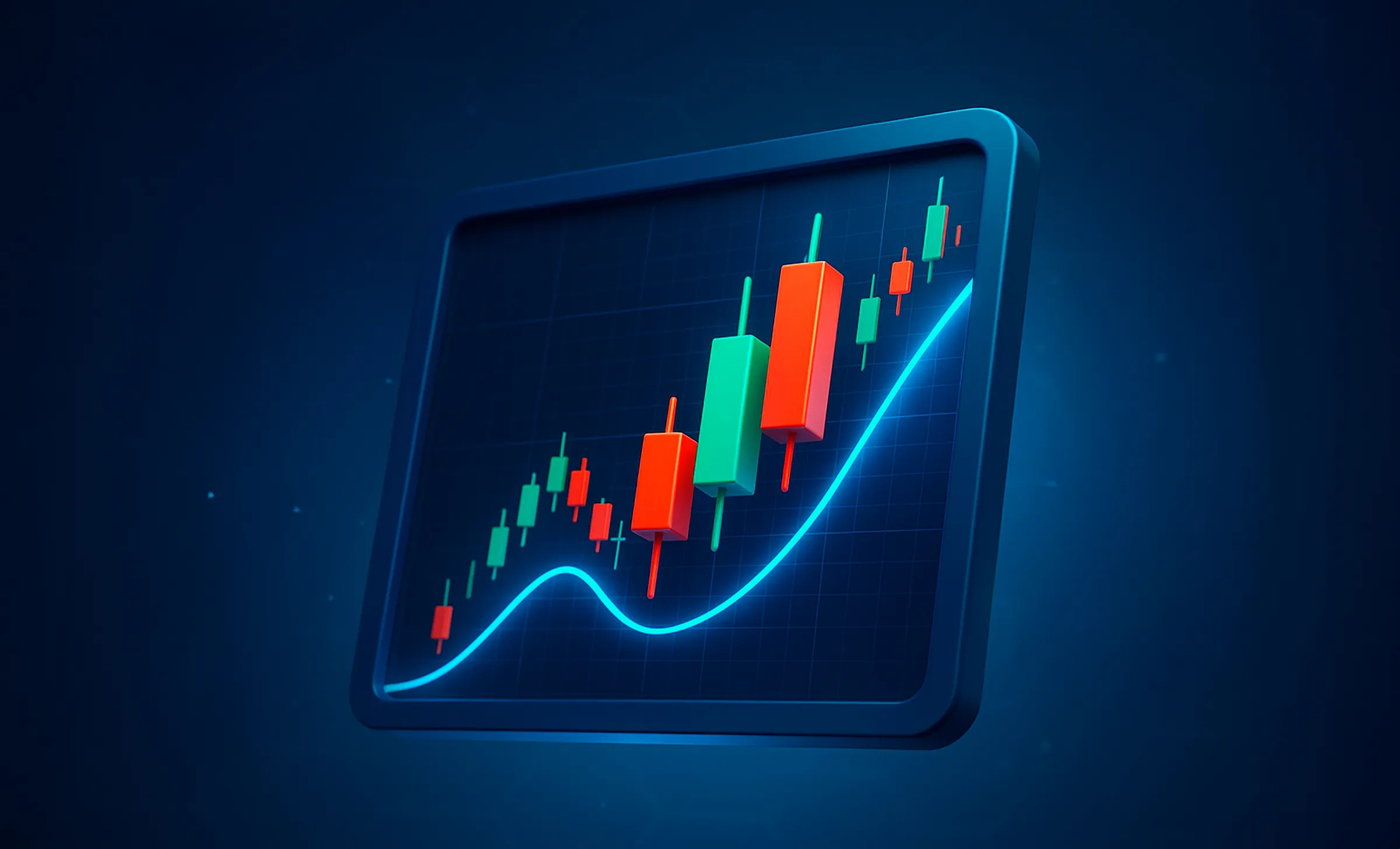
Bullish means having an optimistic outlook that prices may rise over time. The term comes from the idea that a bull attacks by thrusting its horns upward, which matches the direction of rising prices. Bullish can describe different scopes, such as:
Bullish sentiment often shows up when news or market conditions feel supportive, such as stronger-than-expected earnings results, improving jobs data or lower volatility. These signals don’t guarantee higher prices. They’re simply examples of the kinds of headlines that can coincide with a more optimistic mood.
Bearish means someone feels pessimistic about prices. A bearish view suggests prices may fall or face more downside risk. The term comes from the idea that a bear attacks by swiping its paws downward, which matches the direction of falling prices.
As with bullish, it can apply at different levels, e.g., you can be bearish on a single company, a sector or the whole market. Bearish sentiment can be more common when uncertainty rises – think weaker economic growth data, rising inflation concerns or geopolitical shocks.
Sentiment doesn’t move prices on its own, but it can shape how people react to information. When many participants feel bullish or bearish at the same time, it can influence trading behavior and, in turn, market dynamics.
Here are a few ways sentiment can show up in markets:
Investor psychology matters because humans aren’t perfectly rational. In simple terms:
While the terms bullish and bearish describe sentiment, ‘bull markets’ and ‘bear markets’ are broader labels that describe market direction over a period of time.
A common shorthand definition is based on a major index’s move:
But remember, these thresholds are widely used as conventions, not strict rules. Different sources may use different measures or time frames.
Examples of indicators people watch include growth trends (like GDP), employment conditions (like the unemployment rate), inflation trends (like consumer price measures) and interest rate environment.
These indicators are often discussed together, and they can sometimes send mixed signals. That’s one reason markets can shift direction quickly.
Some market commentary uses technical indicators to describe what prices have been doing — not to predict what comes next. Two of the most common are:
Feature | Bullish/bull market | Bearish/bear market |
Sentiment | More optimistic expectations about prices | More cautious or pessimistic expectations about prices |
Typical price trend | Prices are generally trending higher over a period of time | Prices are generally trending lower over a period of time |
Volatility | Can be relatively calmer at times, but still may spike | Often more volatile, with sharper moves possible |
Market participation | Interest and participation may increase | Participation may pull back as uncertainty rises |
Common headlines | Focus on growth, improving outlooks or ‘risk appetite | Focus on uncertainty, downside risks or ‘risk aversion’ |
People react differently depending on their goals, time horizon and risk tolerance. Still, certain behaviors tend to be discussed more in each environment.
In more bullish periods, you may see higher participation and risk appetite, more attention on growth stories and ‘fear of missing out’ (FOMO) narratives in headlines. In more bearish periods, you may see more caution and reduced risk appetite, more focus on risk and uncertainty and greater attention to downside scenarios.
No matter the market mood, it helps to separate what you know from what you assume. Market phases can be identified more confidently after they’ve already happened.
Ready to learn more about markets? Use the Crypto.com Stocks Learn Hub to explore topics about stocks, ETFs and much more. To open a Crypto.com Stocks account, start by downloading the Crypto.com App.
This is informational content sponsored by Crypto.com and should not be considered as investment advice.
Foris Capital US LLC (“FCUL” or referred to herein as “Crypto.com Stocks”) is a broker-dealer registered with the U.S. Securities and Exchange Commission (SEC) and a Member of the Financial Industry Regulatory Authority (FINRA) and the Securities Investor Protection Corporation (SIPC). For further information about FCUL, please visit FINRA BrokerCheck.
FCUL is a subsidiary of Crypto.com.
All investments involve risk, and not all risks are suitable for every investor. The value of securities may fluctuate and as a result, clients may lose more than their original investment. Past performance does not guarantee future results.