

Market
Cosmos
Buy
Sell
One time
USD

ATOM
≈
5.7879
ATOM
$50
$150
$500
Pay with
Google Pay
Apple Pay

USD Account
1-2 business days • No fees
Credit/debit card
Instant •
2.99%
0% fee first 30 days
Market
Cosmos
Buy
Sell
One time
USD
ATOM
≈
5.7879
ATOM
$50
$150
$500
Pay with
Google Pay
Apple Pay
USD Account
1-2 business days • No fees
Credit/debit card
Instant •
2.99%
0% fee first 30 days
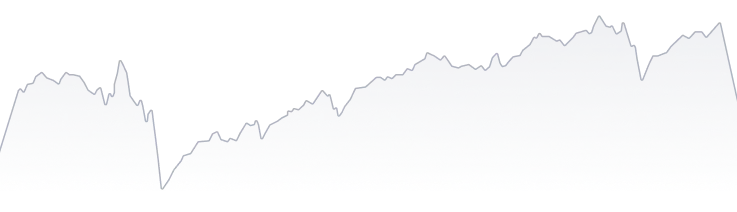
ATOM
$1.7278
-2.25%
| Time | Price | Change |
|---|---|---|
| Today | 0.00% | |
| 1 day | -$0.04 (2.25%) | |
| 1 week | -$0.21 (10.90%) | |
| 1 month | +$0.19 (12.59%) | |
| 1 year | -$1.43 (43.91%) |
Explorers
View
Whitepaper
View
Website
View
Source Code
View
Markets
View
Sustainability Disclosure
View

Cosmos (ATOM): 95% Below Its High. I'm Buying Here
Youtube Video
6 days ago
Market cap.
$926.62M
Rank
#67
24H volume
$26.03M
Circulating supply
536.31M ATOM
100% of total
All-time high
$44.70
-2486.85%
All-time low
$1.13
34.54%
Total Supply
536.31M ATOM
The Cosmos ecosystem is a decentralised network of independent blockchains powered by the ATOM cryptocurrency. Cosmos seeks to solve existing problems in the blockchain industry by building an ecosystem of blockchains connected through an Interblockchain Communication protocol. Tendermint, a core contributor to the Cosmos network, is instrumental to Cosmos’ progress.
Cosmos was introduced through the publication of its white paper written by Tendermint co-founders Jae Kwon and Ethan Buchman and published in 2016. Its native token ATOMwas initially offered through two private sales in January 2017 and a public sale in April 2017. Kwon, who is recognised as the project’s principal architect, stepped down as CEO in 2020 and was replaced by Peng Zhong. Cosmos then launched the inter-blockchain communications (IBC) protocol, the platform’s standard for blockchain interoperability, in April 2021.
The Cosmos network is composed of zones, or independent, parallel blockchains. Each zone is powered by classical Byzantine fault-tolerant (BFT) consensus protocols like Tendermint. Cosmos uses a proof of stake (PoS) consensus algorithm to secure its work of connecting different blockchains. This translates to a higher likelihood of rewards distribution and transaction verification to validator nodes with higher amounts of ATOM staked.
Aside from staking in Cosmos validators, ATOM is also used to pay fees within the network. These fees are proportional to the corresponding computational consumption of a transaction, similar to how gas fees work on Ethereum.

Earn up to 6.5% p.a. with regular payouts

Make investing stress-free

Trade with deep liquidity and low fees