





Can Bitcoin price reclaim $100,000 in 2026?
As Bitcoin enters 2026 amid shifting macroeconomic conditions, ETF inflows, and evolving regulation, holders are divided on whether BTC can reclaim the $100,000 level, or if new market headwinds will cap its next rally.
 Charles Archer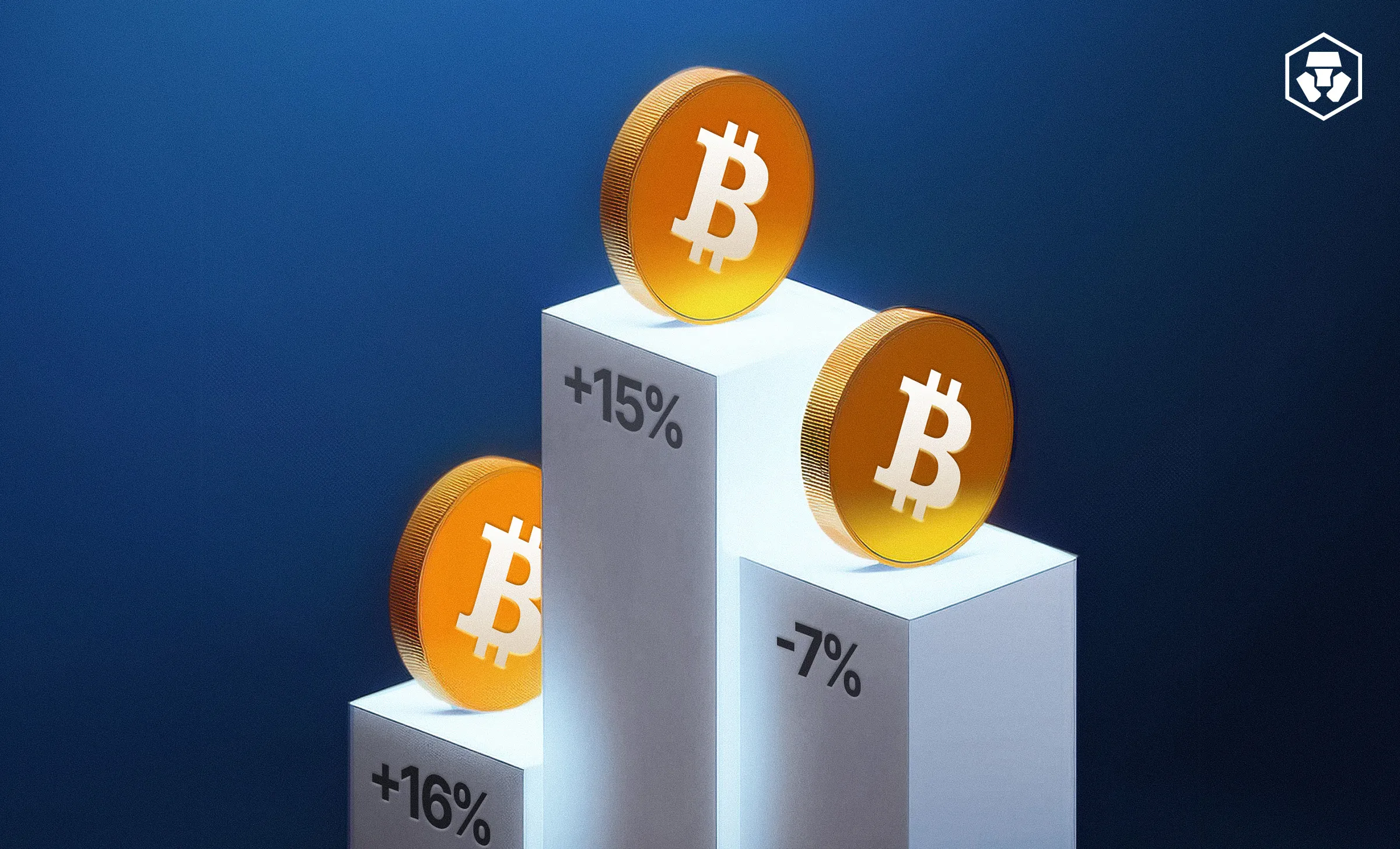
Key Takeaways
- The U.S. dollar weakened notably throughout 2025, while gold rose and Japan's bond market crisis has unsettled investors.
- In this context, Bitcoin's 6% fall in 2025 was arguably a reasonable performance.
- Retaking $100,000 may require BTC proving itself as a global hedge.
Cryptocurrency matured in 2025, but not in the way many expected. Fueled by political optimism from a perceived crypto-friendly administration, Bitcoin surged to an all-time high of approximately $126,000 only months ago.
Yet despite this historic peak, Bitcoin finished the year down by more than 6%, a perhaps-needed reminder that new highs are not a guarantee of annual gains.
The turning point came on 10 October during what traders now call ‘The Great Shake-Out.’ A $19 billion liquidation cascade, triggered by proposed U.S. tariffs and broader risk-off sentiment, abruptly ended Bitcoin's momentum. Excessive leverage accumulated during the climb to $126,000 left the market vulnerable, and once the forced selling began, deleveraging fed on itself, wiping out overleveraged positions in hours.
While 2025 brought unprecedented institutional progress, it also introduced new complexities. In March, the U.S. formally established a Strategic Bitcoin Reserve using roughly 200,000 BTC seized from legal cases, a watershed moment signaling government-level recognition of Bitcoin as a strategic asset.
July's GENIUS Act created the first comprehensive federal stablecoin framework, mandating 1:1 reserves and monthly audits while establishing crucial consumer protections. The SEC also streamlined crypto ETF approvals from 240 days to approximately 75 days, unleashing spot ETFs for Solana, XRP and HBAR.
Yet these advances came with trade-offs. The government-held Bitcoin stockpile introduced concerns about potential future selling pressure. Accelerated ETF approvals fragmented capital flows, as investment increasingly rotated into alternative assets rather than concentrating in Bitcoin.
And traditional investors unfamiliar with crypto's volatility may well have amplified October's sell-off, proving more prone to panic than seasoned holders.
Macro forces reshaping Bitcoin's outlook
Bitcoin's 2026 path forward cannot be separated from the current broader macroeconomic turbulence.
The U.S. dollar weakened notably throughout 2025 as rising deficits, trade tensions and expectations of looser monetary policy eroded confidence in its status. A declining dollar has historically supported hard assets like gold and Bitcoin, and this dynamic has intensified amid global fiscal stress.
Gold's surge to above $4,600/oz reflects this environment, reaffirming its traditional role as a store of value during monetary uncertainty. Bitcoin's correlation with gold has strengthened intermittently, reinforcing arguments that BTC is increasingly viewed through a similar lens, albeit with significantly higher volatility.
Japan's bond market crisis has further unsettled investors. Persistent yield distortions and questions over debt sustainability in the world's third-largest economy have raised fears of broader contagion in sovereign bond markets, underscoring the fragility of traditional financial systems for global investors seeking alternatives.
Against this backdrop, Bitcoin's modest 6% decline in 2025 appears less alarming in historical context. The asset has endured 50% corrections within previous bull markets and still set new highs afterward. What has changed is not Bitcoin's volatility, but the composition of its investor base and the macro forces driving demand.
If gold's rise reflects a global search for monetary protection, Bitcoin's positioning, according to some, as ‘digital gold’ remains intact, though contested. Its fixed supply, growing institutional integration and increasing relevance in sovereign risk discussions support the long-term thesis.
However, leverage excesses, fragmented capital flows and shifting regulatory expectations may cap near-term upside momentum.
Near-term catalysts: Can $100,000 Be Reclaimed?
Bitcoin's short-term outlook has strengthened considerably after surging above $96,000, driven by steady inflation data and a sharp rebound in institutional flows. The combination of macro tailwinds and renewed capital allocation suggests momentum is building toward another attempt at six figures.
BTC jumped more than 4% within 24 hours of December's U.S. Consumer Price Index release, which showed inflation holding steady at 2.7% year over year with a 0.3% monthly increase. The data eased fears of renewed inflationary pressure, prompting a risk-on move across markets.
According to the CME FedWatch Tool, markets are pricing in a 97.2% probability that interest rates will remain unchanged at the upcoming meeting, with the target range expected to stay at 3.50%–3.75%.
As inflation stabilizes, investors are increasingly considering a policy pause, or even rate cuts later in the year. Lower rates, in theory, reduce the opportunity cost of holding non-yielding assets like Bitcoin, improving its price outlook.
Institutional demand has also played a critical role in Bitcoin's latest advance. After two weeks of net outflows, U.S.-listed spot Bitcoin ETFs recorded $753.8 million in inflows on Tuesday, the highest single-day total in 2026 so far. Over two trading sessions, cumulative inflows reached $870.5 million.
Fidelity's FBTC, BlackRock's IBIT and Grayscale's GBTC all saw large inflows, pushing cumulative spot Bitcoin ETF demand above $57 billion, lifting Bitcoin's market capitalization to around $1.9 trillion.
Technical setup: The road to $100,000
From a technical perspective, Bitcoin's breakout has strengthened the bullish case. The recent surge pushed BTC above a converging triangle pattern forming since November 2025, supported by strong volume. Bitcoin's 24-hour trading volume climbed to approximately $61 billion, among the highest levels in recent weeks.
Immediate resistance sits around $92,500 and $93,500, where selling pressure could emerge. However, a successful break above $96,000 could bring $98,500, $99,000, and ultimately the $100,000 psychological threshold into view.
On the downside, $92,000 remains key near-term support, with deeper pullbacks potentially testing $90,000 if profit-taking accelerates. However, broader sentiment seems to favor the bulls.
$100,000? Plausible, but not guaranteed
Reclaiming $100,000 in 2026 is plausible but requires several conditions to align: reduced leverage, clearer regulatory signaling, continued dollar weakness and renewed conviction in Bitcoin's store-of-value role relative to gold.
Many market observers note that capital is flowing back into the wider crypto market, potentially setting the stage for renewed upside across altcoins and niche sectors. This broader participation suggests the current rally represents genuine re-engagement with digital assets rather than a single-asset move.
For now, Bitcoin's recovery suggests resilience rather than exuberance. Whether that resilience is enough to propel BTC back above six figures will depend less on hype, and more on how convincingly Bitcoin can assert itself as a credible blockchain hedge in an increasingly unstable global financial landscape.
How to buy crypto in 5 steps
Looking to buy crypto online? We make it as simple as possible to start:
- Choose a trusted crypto platform – select a reputable exchange like Crypto.com with strong security and positive customer reviews.
- Create an account – sign up with your email, complete KYC verification, and set up two-factor authentication.
- Deposit funds – add money using a bank transfer, debit/credit card, or other supported payment methods.
- Purchase crypto – search for your preferred crypto on the platform and place a buy order.
- Secure your crypto – either let us handle the storage or transfer your crypto to a personal wallet for peace of mind.
Important Information: This is informational content sponsored by Crypto.com and should not be considered as investment advice. Trading cryptocurrencies carries risks, such as price volatility and market risks. Before deciding to trade cryptocurrencies, consider your risk appetite. If you use a non-custodial wallet, you are responsible for securely storing your seed phrase. Losing it may result in loss of access to your assets.
Share with Friends
Ready to start your crypto journey?
Get your step-by-step guide to setting upan account with Crypto.com
By clicking the Submit button you acknowledge having read the Privacy Notice of Crypto.com where we explain how we use and protect your personal data.