Peer-to-peer (P2P) payments are digital transfers made directly between two or more parties, typically facilitated by banks or financial institutions for funding and withdrawals. Here, we're exploring how they work, use cases, limitations and alternatives.

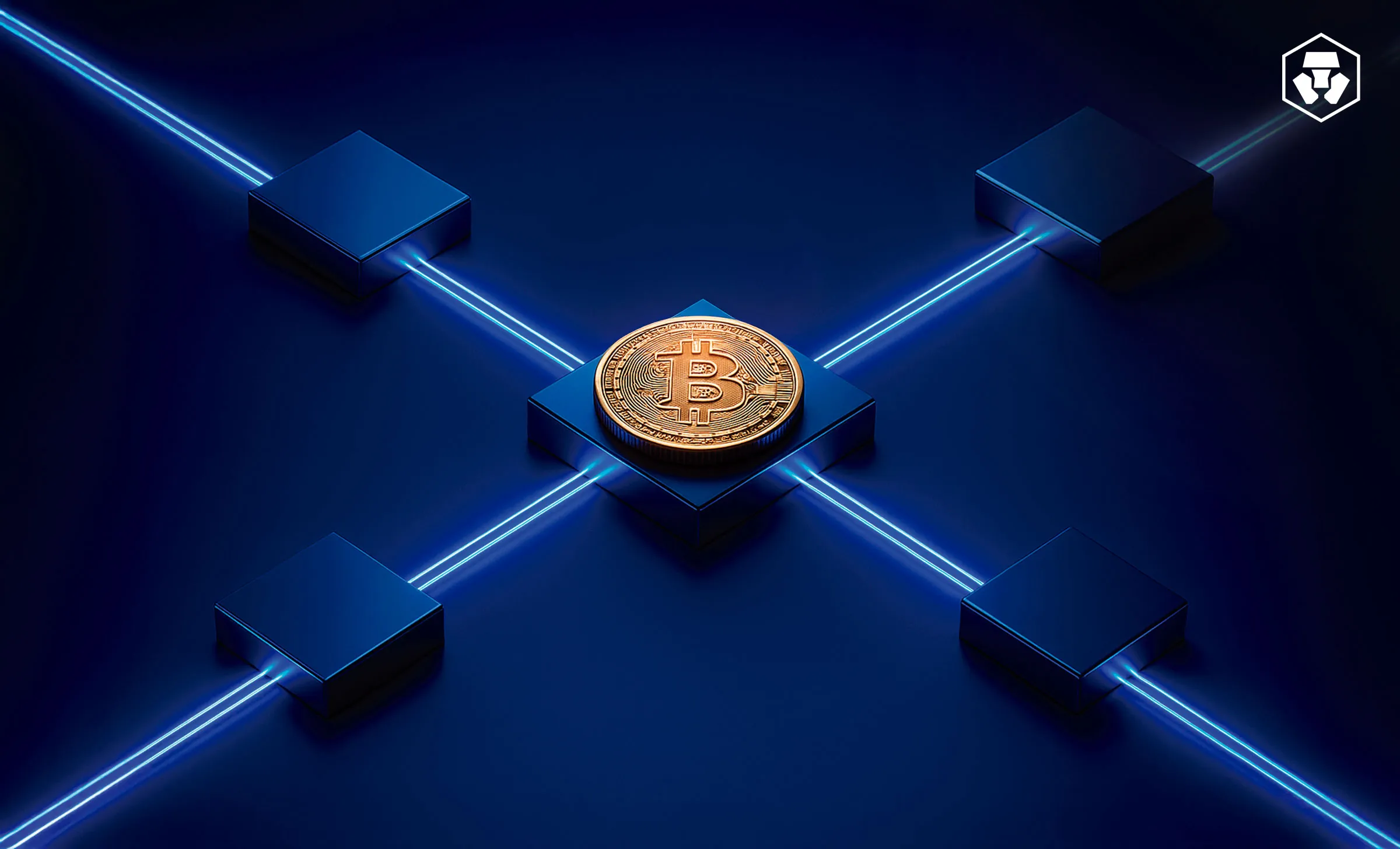
Peer-to-peer (P2P) payments are digital transfers made directly between two or more parties, typically facilitated by banks or financial institutions for funding and withdrawals. Here, we're exploring how they work, use cases, limitations and alternatives.
Some P2P systems operate through centralized intermediaries, others—such as blockchain-based P2P networks—enable truly decentralized transfers without a central authority.
For fiat transfers, the intermediary you use might be an app like PayPal or a digital wallet like Apple or Google Pay. You can make both fiat and crypto P2P payments. For crypto, there are two types of P2P; crypto-native P2P which uses blockchain technology for crypto transfers and crypto platform P2P, which involves a centralized exchange for crypto and fiat transfers.
Crypto platform P2P transfers involve apps, like Crypto.com, which offer a centralized crypto-native P2P exchange connecting buyers and sellers.
They also let you buy bitcoin and other cryptocurrencies using fiat currency, like dollars. You’ll typically do this by adding fiat to your account, either using a credit card, debit card, bank transfer or digital wallet. Then you’ll follow the steps in the platform to buy crypto currency.
For crypto-native P2P transfers, you’ll use blockchain technology instead of a centralized exchange that acts as an intermediary.
The distinguishing features of P2P payments are convenience and speed. Although you’re sending on a P2P network, you may need a bank account for funding and withdrawing from the network, whether that’s through an app like PayPal or a centralized exchange like Crypto.com.
A P2P payment is distinct from a bank transfer. When a bank transfers money from your account to another person’s account, it debits the money directly from your account and sends a payment instruction to the recipient bank, using account and routing numbers.
In contrast, P2P payments typically act as intermediaries. Instead of sending money directly from one bank account to another using routing and account numbers, P2P apps often transfer funds between user profiles identified by email or phone number.
The mechanism for doing this differs from a bank transfer. In many cases, the user selects a recipient using their phone number, email address or saved details. Then they then initiate the transfer, entering the amount and confirming.
The P2P platform then authenticates and verifies the recipient, then verifies the availability of sender funds, before debiting from their funding source the amount they want to send.
P2P payments are convenient for non-regular payments, such as splitting a bill, paying back borrowed money, sending a gift or contributing to shared household expenses between roommates. As P2P user experience evolves, transactions are becoming more convenient and quicker still. With some intermediaries, you have the option to categorise payments, add descriptions and send payment requests.
A big draw of fiat P2P for many users is the ability to send money globally at a lower cost than using a bank. P2P payments may incur lower foreign exchange and handling fees compared to bank transfers. With the accessibility provided through a mobile app, many users find the process convenient and quick compared to making a bank transfer.
P2P payments are also handy for sending one-off payments, or for multiple people paying a single person. It’s especially useful when there’s the option for the recipient to send a payment request link to multiple people at once, for example via a messaging app.
Bank-linked local currency transfers
These need both sender and recipient to use the same intermediary, for example PayPal or Western Union. When you set up your intermediary, you’ll link it to your checking account so you can add and withdraw money.
Depending on which intermediary platform you use, you’ll specify the recipient either by entering their username, tag or code, email address, mobile phone number or by scanning a QR code. They can even send you a payment request with a download link if you don’t yet have the same P2P app.
Once you’ve specified the recipient, enter the payment amount. Apps that let you send to a recipient in a different country may prompt you to select the sending and receiving currency.
If the sending and receiving currency are different, you may be able to specify the amount the recipient receives rather than the amount you send. This helps prevent the recipient receiving less than expected due to currency exchange rates or fees.
Once you’ve entered all the payment details and verified your identity, you can send the money. The P2P platform will then take a payment from either your debit card or directly from your bank account. Depending on how you’ve set up your P2P account, this might be instant or take up to a few days.
The recipient will normally receive a notification or message when it arrives. They can then withdraw it from the intermediary/P2P platform to their bank account.
These payments require both sender and recipient to use blockchain technology.
A crypto-native P2P transfer is processed and verified on the blockchain, rather than a centralized exchange.
The sender enters the public wallet address of the recipient they are paying. They then specify the amount they are sending and the transaction fee. The higher the fee, the faster the transaction will complete.
The sender's wallet automatically signs the transaction with their private key. This is like a digital signature that proves that they approve the transfer.
The signed transaction is broadcast to a distributed network of computers, known as nodes, on the blockchain.
Each node verifies the transaction against the specific rules of the network. Then they check the signature is valid and then verify the transaction. When the nodes have verified the transaction a new block is created and added to the blockchain.
The process will vary depending on the user interface of the platform you use, but they will usually follow a process something like this:
Crypto.com supports both crypto-to-crypto and fiat P2P transfers. Once you’ve made your first payment, you can easily select the same recipient again without re-entering their details.
Once you’ve done the first payment, you should be able to select the same recipient without entering their details.
The process will vary depending on the user interface of the platform you use, but they will usually follow a process something like this:
Sending fiat P2P vs crypto P2P, a comparison:
Fiat | Crypto | |
Cost | Often free for local transfers, platforms may mark-up foreign exchange | Network fees may apply if you’re sending to a recipient off-platform |
Accessibility | Apps are free to download | Apps are free to download. First time users may benefit from basic onboarding to get started. |
Global reach | Send money anywhere in the world, but you may pay fees | Send money anywhere in the world, recipient location doesn’t influence fees |
Volatility | No volatility sending local-to-local Potential currency market volatility if sending across borders | Crypto can rapidly increase and decrease in value |
Sending crypto is secure and transfers happen the same way regardless of where the recipient is in the world. One of the most appealing features is the decentralised nature of crypto, with no need for banks.
Beginner crypto users are sometimes surprised by the volatility. Seeing the value of their crypto change quickly over time can be unsettling at first, especially for people who are more used to fiat, stocks and funds. Another common learning curve is the complexity of wallets and unfamiliarity with the user journey, compared to the more intuitive fiat P2P apps.
You can send crypto P2P with Crypto.com in just five steps. Once you’ve done it a few times, it’ll feel as familiar as sending money with your digital wallet of choice.
Log in to the Crypto.com app, then:
Some P2P payment platforms offer their service without a fee. Where there are transfer fees, they’re usually quite low for non-business payments. You may end up paying a small flat fee or a percentage of the transfer.
Speed is another benefit. Most of the time your payment will arrive instantly with the recipient. A lot of P2P users appreciate the accessibility and high quality user experience of using this method as opposed to having to access their bank account and potentially complete a number of steps to add a new recipient.
Because P2P platforms are developed within the tech ecosystem, rather than being driven by banking business requirements, they tend to be more user-friendly, with richer features.
There are risks, too. Although there are plenty of anti-fraud guardrails and security components, customer protections aren’t the same as you’d get with a bank. It may be easier to recover money lost to fraud from your bank. P2P payments are certainly more suitable for smaller payments.
When you choose a P2P platform, look for a highly regulated and compliance focused provider like Crypto.com. Big name P2P payment providers like PayPal, Monzo and Western Union are very transparent about regulatory compliance.
Accreditations and security certifications like ISO 27001 and SOC 2, plus adherence to international standards like the FATF's Travel Rule are a strong sign that a provider takes customer protection seriously.
As a general rule, if you can sign up to a platform without providing identification or much information about yourself, such as your address, you can assume that customer protections won’t be as robust.
As more and more people discover the convenience of using a digital wallet like Apple Pay or Google Pay, the user base becomes more accustomed to sending money without their bank. This opens up a range of opportunities for providers to more deeply integrate P2P payments into the mainstream financial services landscape.
One hurdle the sector is trying to address is interoperability between ‘rival’ apps. At present it can be complicated or prohibitively expensive to send large amounts between two different intermediaries. Solving this problem will lead to even greater adoption of P2P as a more routine method of sending money.
Integration with other technology, like billing, budgeting and accounting software will help customers do more with their wallet.
Countries including the UK and US are exploring central bank digital currencies (CBDCs), which are government-backed digital forms of money.
Some critics claims CBDCs are unlikely to replace regular money in the near term, but could become another option for sending, receiving and requesting money. This could prove especially popular with people who regularly send money to recipients overseas.
Until CBDCs achieve mainstream adoption, users will find that platforms like Crypto.com already have many features with the digital future of borderless payments.
Important Information: This is informational content sponsored by Crypto.com and should not be considered as investment advice. Trading cryptocurrencies carries risks, such as price volatility and market risks. Before deciding to trade cryptocurrencies, consider your risk appetite. Services, features and other benefits referenced in this article may be subject to eligibility requirements, token holdings, and may change at the discretion of Crypto.com. Services, features and other benefits referenced in this article may be subject to eligibility requirements, token holdings, and may change at the discretion of Crypto.com.