

Market
Solana
Buy
Sell
One time
USD

SOL
≈
0.098479626
SOL
$50
$150
$500
Pay with
Google Pay
Apple Pay

USD Account
1-2 business days • No fees
Credit/debit card
Instant •
2.99%
0% fee first 30 days
Market
Solana
Buy
Sell
One time
USD
SOL
≈
0.098479626
SOL
$50
$150
$500
Pay with
Google Pay
Apple Pay
USD Account
1-2 business days • No fees
Credit/debit card
Instant •
2.99%
0% fee first 30 days
| Time | Price | Change |
|---|---|---|
| Today | 0.00% | |
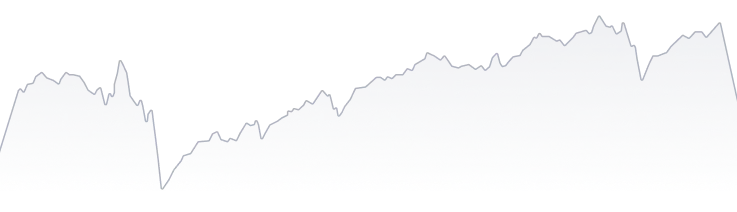
| 1 day | +$1.16 (1.12%) | |
| 1 week | -$4.58 (4.34%) | |
| 1 month | -$18.41 (15.37%) | |
| 1 year | -$98.16 (49.29%) |
Explorers
View
Whitepaper
View
Website
View
Source Code
View
Markets
View
Sustainability Disclosure
View
SOL
$101.54
+1.12%
Big 3
+30.61%

🤔 Can Solana Hold The Line? - SOL Crypto Analysis
Youtube Video
8 hrs ago
Solana’s faster finality is live. What changes for users?
crypto.news
16 hrs ago
Ethereum
$2,351.04
+1.55% YTD
Bitcoin
$80,749.85
+1.09% YTD
Market cap.
$59.9B
Rank
#7
24H volume
$1.91B
Circulating supply
589.93M SOL
93% of total
All-time high
$294.33
-189.87%
All-time low
$0.51
99.50%
Total Supply
636.58M SOL
Solana is a high-performance, single-chain blockchain protocol that prioritizes scalability without compromising on decentralization or security. Built by a team of networking engineers, its core innovation lies in a combination of two consensus mechanisms: **Proof of History (PoH)** and **Proof of Stake (PoS)**. The project aims to become the leading blockchain for modern internet applications that require high throughput and low fees.
The idea for Solana was conceived by **Anatoly Yakovenko** in November 2017. He published a white paper detailing a new timekeeping method for distributed systems called Proof of History. Yakovenko recognized that a major bottleneck in blockchains like Bitcoin and Ethereum was the time required for nodes to agree on the order of transactions. PoH, he argued, could solve this by creating a historical record that proves the occurrence of an event at a specific moment, thereby streamlining the transaction sorting process.
In February 2018, Yakovenko, along with former Qualcomm colleague Greg Fitzgerald, released a prototype of the first open-source implementation of his white paper. They, along with another former Qualcomm colleague, Stephen Akridge, and others, co-founded the project. They named it Solana, inspired by the beach in San Diego where they had all lived and surfed. The Solana mainnet officially launched in March 2020.
The core of Solana's scaling solution is its decentralized clock, **Proof of History (PoH)**. PoH is not a consensus mechanism on its own but works in conjunction with **Proof of Stake (PoS)**. It uses a cryptographic function to create a verifiable sequence of events, effectively acting as a global, trustless timestamp for the network. This eliminates the need for nodes to constantly communicate to agree on the time and order of transactions, significantly increasing network efficiency.
This innovative architecture allows Solana to achieve incredibly high transaction speeds, with a theoretical capacity of over 700,000 transactions per second (TPS). This high throughput and low cost per transaction make it particularly appealing for applications that demand speed and efficiency, such as high-frequency trading.
Solana is a general-purpose blockchain that is a direct competitor to Ethereum. It provides a platform for developers to build applications using the Rust programming language, which is different from Ethereum's Solidity or Vyper. End-user applications on Solana include:
* **Decentralized Finance (DeFi):** The network's speed and low fees are ideal for DeFi protocols, including decentralized exchanges (DEXs) like Serum, lending platforms, and other financial services.
* **Non-Fungible Tokens (NFTs):** The low transaction costs make minting and trading NFTs on Solana much more affordable for a wider audience.
* **Gaming:** Solana's high throughput and low latency are perfect for blockchain-based games and the metaverse, which require fast, real-time interactions.
**SOL**, Solana's native cryptocurrency, has two main functions: it is used to pay for transaction fees and for staking, which helps to secure and support the network.

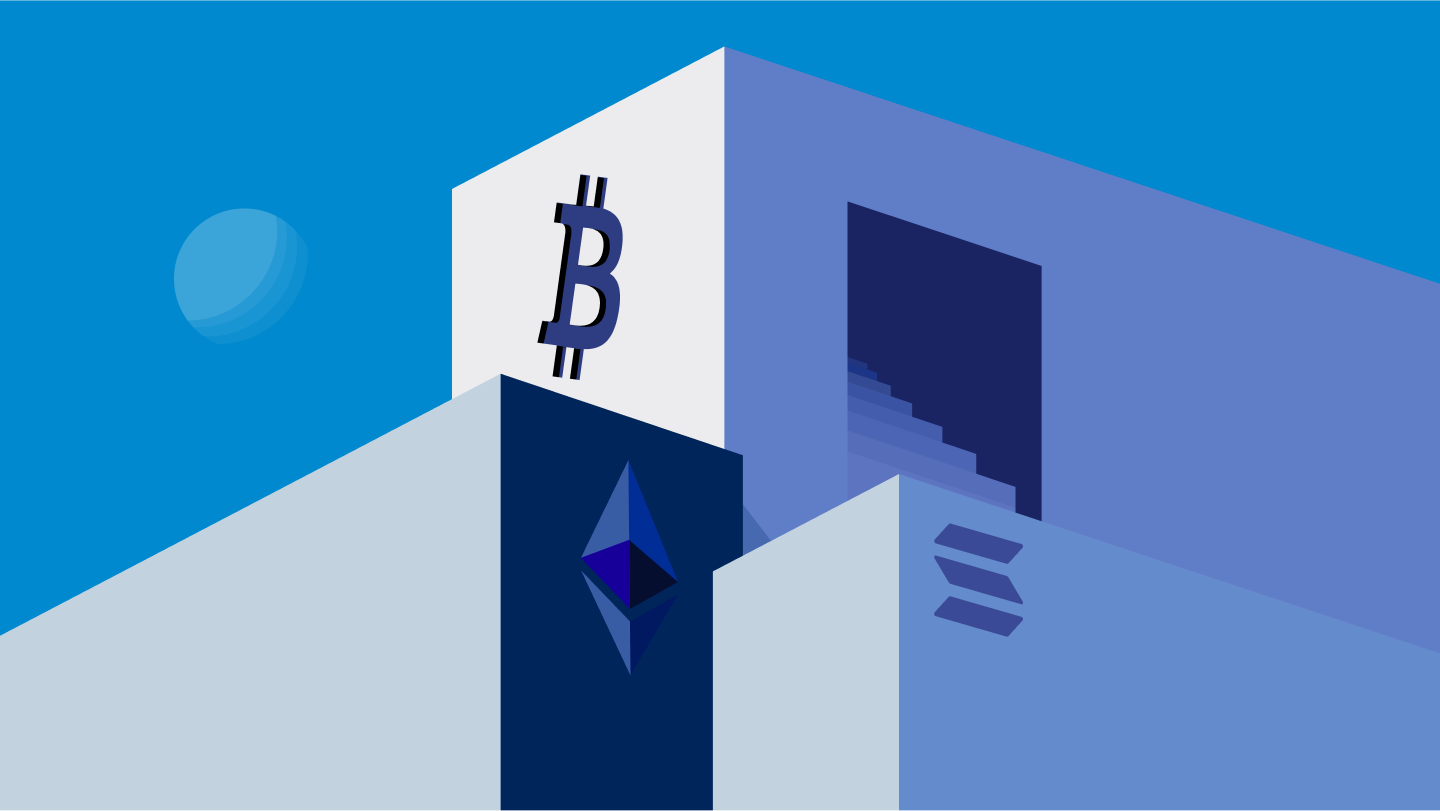
Big 3
7 Months

+3

Earn up to 2.75% p.a. with regular payouts

Make investing stress-free

Trade with deep liquidity and low fees