Not sure whether to keep your own crypto key or let someone else hold it for you? Our guide to custodial vs non-custodial wallets can help.

Not sure whether to keep your own crypto key or let someone else hold it for you? Our guide to custodial vs non-custodial wallets can help.
Selecting the best type of wallet for storing and safeguarding digital assets is crucial when it comes to owning crypto. There are many different types of wallets on the market, and things can get confusing on what to choose.
In this article, we dive deeper into custodial and non-custodial wallets. For a quick guide on whether users should keep their own crypto key versus letting someone else take responsibility, read on.
Hot, cold, hardware, software: Learn more about the different types of crypto wallets.
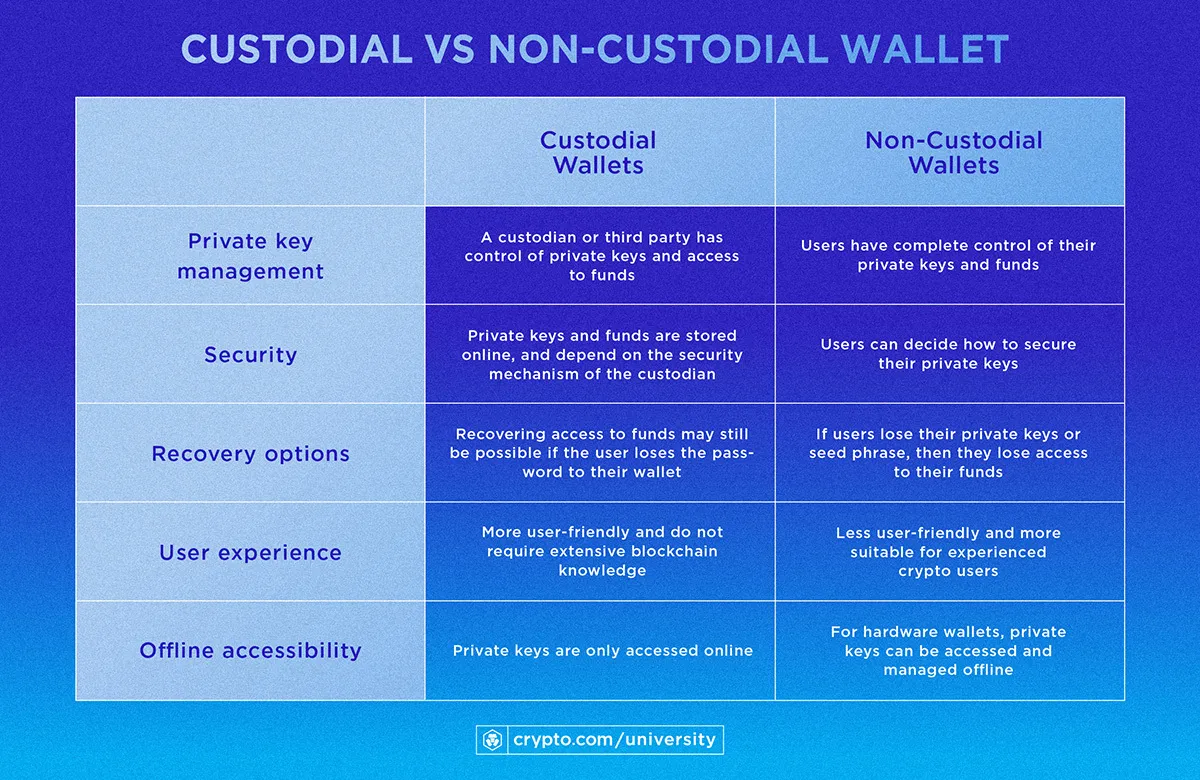
To understand how a custodial wallet works, it’s important to know first how crypto wallets work. Crypto wallets do not actually contain a user’s funds. Instead, they contain the public key, which lets the user set up transactions, and the private key, which is used to authorise transactions.
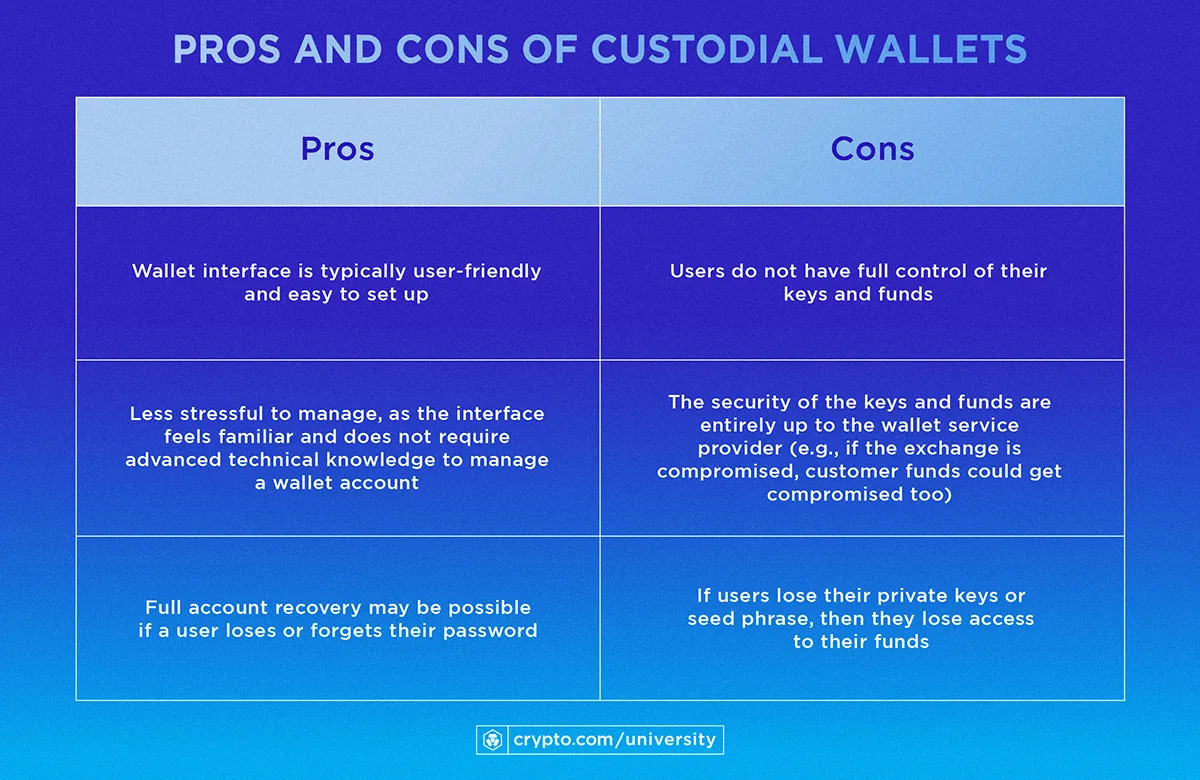
As its name suggests, a custodial wallet is where a third party takes custody of private keys on behalf of users. The third party has full control over the crypto assets, assuming the responsibility of managing the user’s wallet key, signing transactions, and protecting the user’s crypto assets.
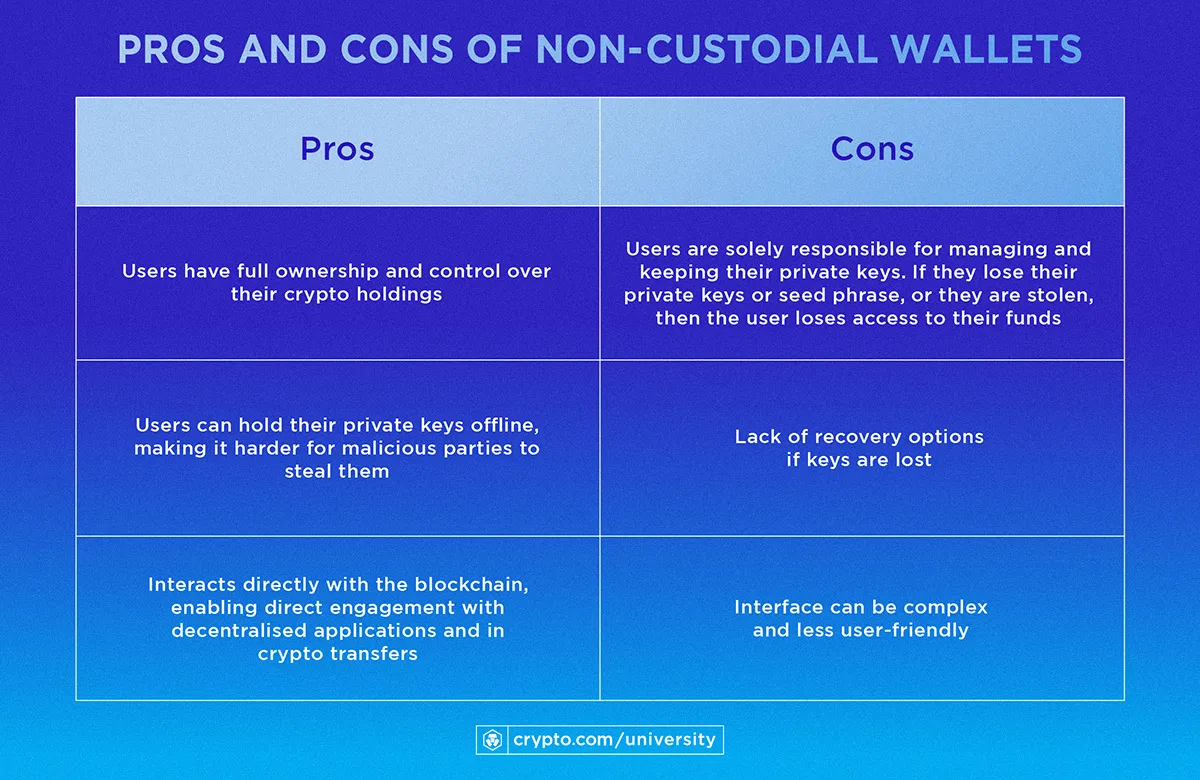
A non-custodial wallet, or self-custody wallet, is where the crypto owner is fully responsible for managing their own funds. The user has full control of their crypto holdings, manages their own private key, and handles transactions themselves.
Crypto.com Onchain is a non-custodial wallet that lets users easily manage and store their crypto, as well as provides secure access to a full suite of DeFi services all in one place. Unlike with a centralised custodial solution, users have full control and ownership of their crypto when they use Crypto.com Onchain. It also offers an additional layer of security features, wherein private keys are encrypted locally on users’ devices with secure enclaves and can be protected by biometric and two-factor authentication (2FA).
Aside from the benefits and security that non-custodial wallets bring, Crypto.com Onchain has also integrated DeFi offerings, including DeFi Earn. It also features a Wallet Extension so users can seamlessly access their funds from a browser and make transfers from different devices.
Learn more about Crypto.com Onchain and how to set it up.
Both custodial and non-custodial wallets have their own sets of benefits and limitations. For users who prioritise ease of use and backup recovery options, custodial wallets are a sensible solution. But for those who want full control and ownership of their private keys, non-custodial wallets might be what they’re looking for. Ultimately, it is up to the user, and the non-custodial Crypto.com Onchain is one of many options to consider.
Important information:This is informational content sponsored by Crypto.com and should not be considered as investment advice. Trading cryptocurrencies carries risks, such as price volatility and market risks. Before deciding to trade cryptocurrencies, consider your risk appetite. Services, features and other benefits referenced in this article may be subject to eligibility requirements, token holdings, and may change at the discretion of Crypto.com.
Past performance may not indicate future results. There's no assurance of future profitability, and content may not reflect current opinions.


