Learn what crypto cloud mining is, how it works, its pros and cons, and whether it could be right for you. Beginner’s guide with tips and FAQs.

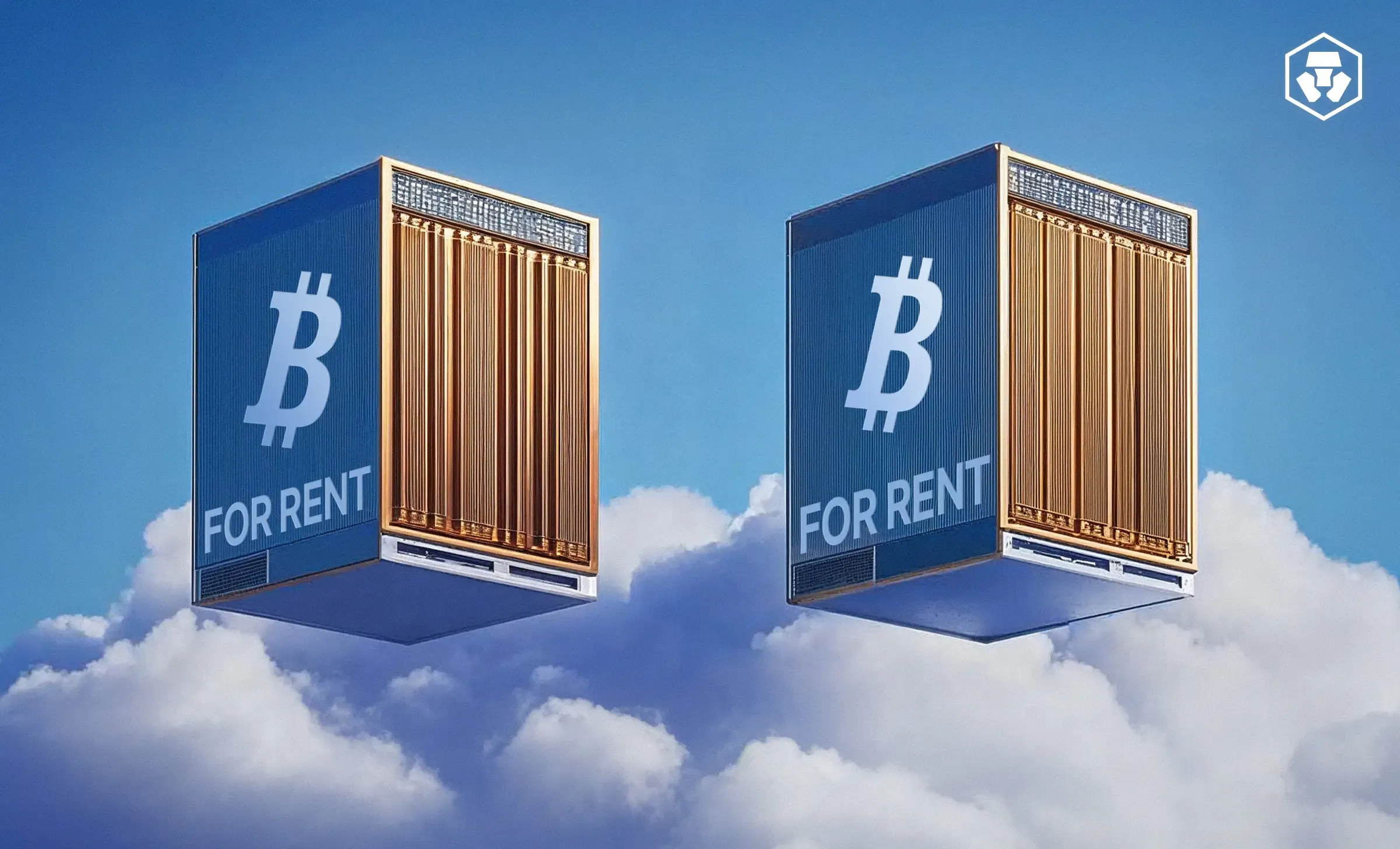
For those curious about Bitcoin mining but feel like it is all too technical, expensive, and environmentally unfriendly, cloud mining might be a worthy on-ramp.
It’s one of the simplest ways that one could earn Bitcoin without building a mining rig or figuring out GPU configurations.
Crypto cloud mining allows users to earn cryptocurrency by renting computing power from remote data centres instead of running their own mining hardware.
It’s a service model where individuals rent hash power (the computational energy used to validate transactions) and receive a proportional share of mining rewards.
Traditional mining requires expensive rigs, technical setup, and substantial electricity use. In cloud mining, these burdens are handled by the provider, who operates large-scale facilities. The user simply purchases a mining contract, chooses a cryptocurrency, and receives payouts automatically.
Common tokens mined through cloud mining include Bitcoin (BTC) and other Proof of Work (PoW) assets such as Litecoin or Dogecoin. Ether mining ended in 2022 when the network moved to Proof of Stake (PoS).
For instance, a user might buy a one-year Bitcoin cloud mining contract that grants 100 TH/s (terahashes per second) of hash power. The provider runs that computing capacity in their facility, and the user earns BTC according to network difficulty and uptime.
Cloud mining connects three key participants:
When mining rewards are earned, the provider credits each user’s account – often daily or weekly – in the chosen crypto. Some services allow automatic conversion into stablecoins or fiat.
The model remains closely tied to PoW, where computational energy secures networks like Bitcoin. As the mining difficulty and block rewards change, profitability fluctuates.
Cloud mining offers an accessible entry point into crypto mining without needing deep technical knowledge.
Through known platforms such as Crypto.com, users can store, trade, or reinvest mined assets seamlessly. For example, mined BTC can be sent to a Crypto.com App wallet for custodial storage, converted into other assets, or spent using the Crypto.com Visa Card (crypto top-ups are done in the App, and converted into fiat during transactions).
Here’s a simple step-by-step guide for beginners:
Check whether the provider publicly lists its data-centre location, uptime records, and pricing model.
Avoid platforms that promise guaranteed profits or use opaque referral schemes.
When a platform or provider is chosen, the sign-up process may involve an ID and email verification to comply with Know Your Customer (KYC) regulations.
Contracts usually vary by:
Compare projected returns across providers before committing.
Many users overlook maintenance or management fees, which can erode profits.
Ensure that the following are clearly understood:
A secure wallet is necessary to receive cloud mining earnings.
Cloud miners can use the Crypto.com Onchain wallet to store BTC and other tokens, or withdraw to a Crypto.com Exchange account for trading.
Monitor performance through the provider’s dashboard.
If rewards exceed expectations, consider redeploying in additional hash power or diversifying into multiple assets.
Feature | Cloud Mining | Local (Hardware) Mining |
Setup Cost | Low to no need for hardware purchases | High. ASICs or GPUs are required. |
Electricity Use | Covered by provider | Paid by miner |
Maintenance | Managed externally | Must manage cooling, repairs |
Technical Skill | Beginner-friendly | Requires expertise |
Profit Control | Dependent on provider’s efficiency | Full control over rigs |
Scalability | Easy to scale via contracts | Limited by physical capacity |
Risks | Platform trust, fees, scams | Hardware failure, power costs |
In short, cloud mining offers convenience, but less control. Local mining lends autonomy, but demands capital and technical know-how.
While cloud mining lowers the barrier to entry, it’s not risk-free.
Some unlicensed operators run fraudulent ‘mining’ websites that pay old users with funds from new deposits.
Red flags include:
Without clear data on the provider’s hardware or location, users can’t verify whether real mining occurs.
Mining difficulty rises over time, while rewards halve periodically. If BTC’s price falls or maintenance fees rise, profits may disappear.
Some jurisdictions restrict mining services or impose additional taxes.
Always research providers carefully and only use regulated, trusted crypto platforms for managing funds.
Bitcoin remains the most common target for cloud mining because its PoW network rewards miners for securing transactions.
However, the competition is fierce. Global hashrate continues to grow, and profit margins shrink.
Many ‘free Bitcoin cloud mining’ websites claim to offer rewards without investment. In reality, most are phishing or Ponzi scams designed to collect deposits or personal data.
For those who prefer more secure and beginner-friendly alternatives, buying BTC directly through trusted apps like Crypto.com offers exposure without operational risk.
Profitability depends on several variables:
Historically, the returns on investment (ROI) ranges from slightly negative to low-double-digit percentages annually, depending on market cycles.
During bull markets, returns could improve, but long contracts can turn unprofitable when prices drop.
As a rule of thumb, cloud miners should calculate break-even periods using conservative assumptions rather than marketing projections.
Run through this checklist before committing funds with a cloud mining provider:
For those who prefer passive exposure, consider strategies such as dollar-cost averaging (DCA) or earning yield through Crypto.com’s on-chain products, which carry clearer terms and lower operational complexity. |
What is cloud mining?
Cloud mining lets you rent computing power from remote data centres to mine crypto without owning hardware.
How does cloud mining work?
You pay a provider for hash power. They operate the machines and share mining rewards proportionally.
Can I make profits with cloud mining?
Profits, if any, can vary with crypto prices, fees, and mining difficulty. It’s generally viewed as a low-margin, moderate-risk activity.
Is cloud mining profitable?
It could be during bullish markets, though fees and difficulty often reduce net gains. Always use conservative projections.
Is cloud mining legal?
Cloud mining is subject to local regulations. Always check jurisdictional rules.
How long does it take to mine 1 BTC via cloud mining?
Timelines depend on the contract’s hashrate and network difficulty. Even large contracts may take months to yield one BTC.
What is a cloud mining contract?
An agreement that defines how much hash power you rent, for how long, and what fees or payouts apply.
What are the risks of cloud mining?
Scams, unverified providers, falling profitability, and hidden fees are common risks.
Is free Bitcoin cloud mining real?
Generally no. Most ‘free’ services are scams. Legitimate mining always has operational costs.
Which is better: Cloud mining or buying crypto?
For most beginners, buying crypto through a trusted exchange like Crypto.com offers clearer costs and immediate ownership.
Due Diligence and Do Your Own Research
All examples listed in this article are for informational purposes only. You should not construe any such information or other material as legal, tax, investment, financial, cybersecurity, or other advice. Nothing contained herein shall constitute a solicitation, recommendation, endorsement, or offer by Crypto.com to invest, buy, or sell any coins, tokens, or other crypto assets. Returns on the buying and selling of crypto assets may be subject to tax, including capital gains tax, in your jurisdiction. Any descriptions of Crypto.com products or features are merely for illustrative purposes and do not constitute an endorsement, invitation, or solicitation.
Past performance is not a guarantee or predictor of future performance. The value of crypto assets can increase or decrease, and you could lose all or a substantial amount of your purchase price. When assessing a crypto asset, it’s essential for you to do your research and due diligence to make the best possible judgement, as any purchases shall be your sole responsibility.