Decentralised networks are changing how we think about investing. When traditional shares are turned into digital tokens, investors can unlock faster, more accessible financial systems. In this beginner-friendly guide, we’ll walk you through the mechanics, benefits and risks of tokenised stock derivatives.

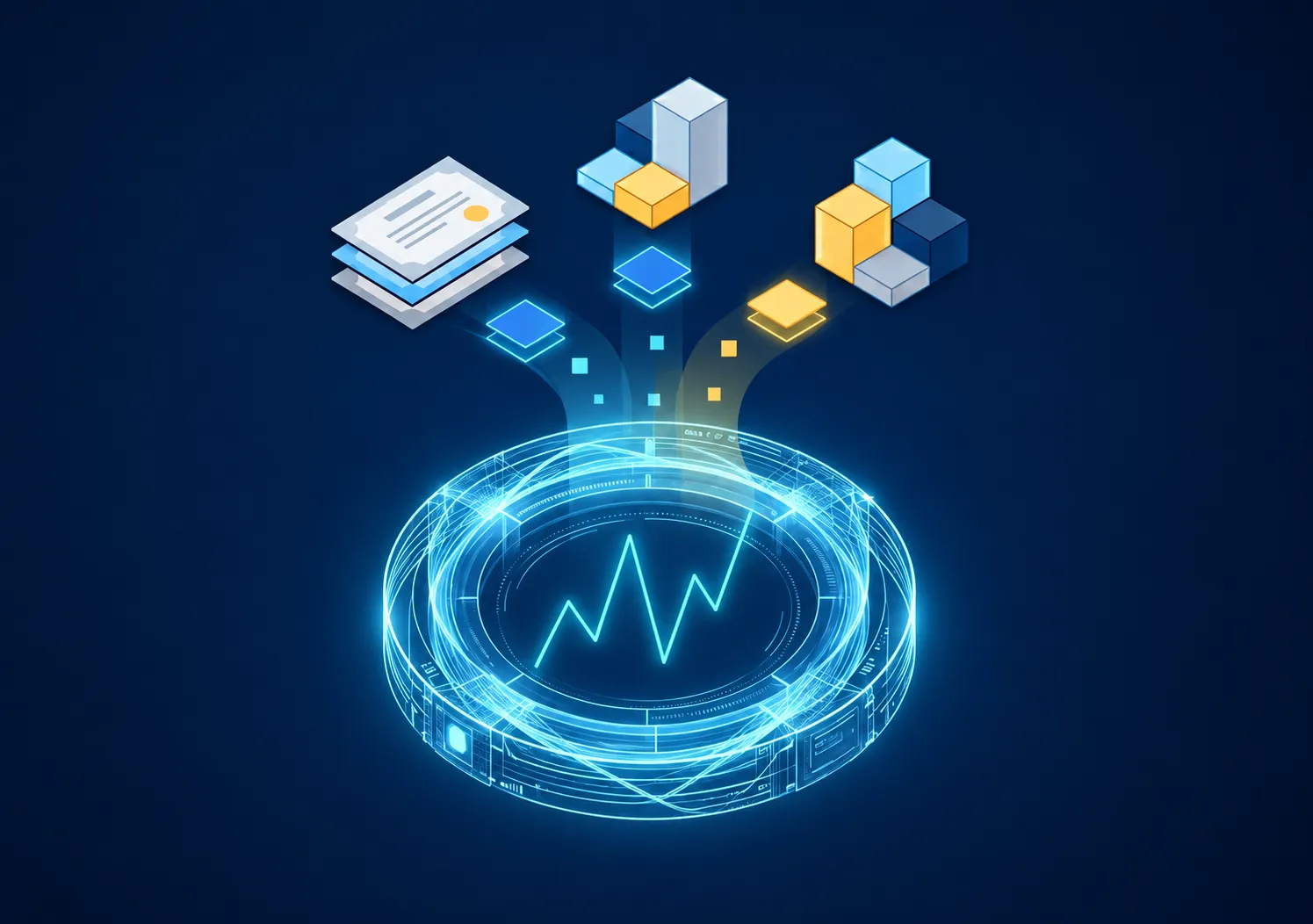
Tokenised stocks are blockchain-based derivative contracts that represent fractional price exposure to traditional, publicly traded company shares. They provide a technological bridge that merges conventional equity markets with decentralised blockchain networks.
With ‘native’ tokenisation, the blockchain itself acts as the official, secure register of who owns what. ‘Wrapped’ or ‘asset-backed’ tokens represent an economic interest in traditional shares. In this case, the actual physical shares are held elsewhere, in traditional electronic depositories.
The rise of Real-World Asset (RWA) tokenisation is genuinely changing how we think about ownership by using blockchain networks as secure, shared digital ledgers. By keeping unchangeable records of every trade, these networks make settling transactions much smoother and more transparent.
Global institutions are watching this transition very closely. Reports from the Organisation for Economic Co-operation and Development (OECD) show how this technology can streamline capital markets. However, both the OECD and the Bank for International Settlements (BIS) remind us that widespread adoption is still in an exploratory, early stage.
For example, a survey by the International Organization of Securities Commissions (IOSCO) found that 91% of regulatory jurisdictions have seen very limited live, systemic use cases. Today, most activity is still confined to small-scale tests.
In fact, tokenised equities currently lag behind other categories like on-chain bonds or money market funds. Traditional stock clearing is already highly efficient and updating corporate registries onto blockchain networks is legally complex. Because of this, digital equities are still in their infancy.
Even so, the wider digital asset world is growing steadily. By early 2026, the total value of tokenised RWAs on public blockchains reached US$29 billion. This growth was driven mostly by yield-bearing government treasuries and tokenised money market funds.
See the top 10 tokenised stocks by market cap
Ever wonder how a physical asset actually moves onto a blockchain? Behind the scenes, RWA tokenisation follows a step-by-step process to ensure everything is secure, compliant and accurate:
When you’re exploring these options, you’ll generally run into two main types of backing:
Using an SPV keeps the underlying shares separate from the issuer's own balance sheet. If the platform ever faces financial trouble, the shares in the SPV remain legally protected for you. This simple setup helps shield investors from the platform's potential financial risks.
The way a token is set up also determines how it is taxed. For instance, some countries treat payouts from business trust tokens exactly like traditional distributions. This keeps your tax treatment consistent, whether you hold a digital token or a standard share.
These smart efficiencies can free up a lot of capital. By exchanging assets instantly, we remove the need for massive pre-funding accounts. Integrating digital tokens into DeFi also lets us automate portfolio management. Smart contracts can handle rebalancing or adjust collateral positions programmatically, eliminating human error and cutting out the manual delays that often slow down traditional systems.
While both tokenised contracts and traditional shares offer economic exposure to your favourite companies, they run on completely different backends:
Tokenised stocks | Traditional shares | |
Primary registry | Held directly on a secure, unchangeable distributed ledger (blockchain). | Kept off-chain by conventional agents, such as banks. |
Trading windows | Open 24/7, enabling you to trade whenever you want. | Restricted to standard stock exchange business hours. |
Settlement speed | Near-instant (‘atomic’) on-chain settlement. | Standard multi-day clearing cycles (T+2 or T+1). |
Intermediaries | Managed automatically on-chain through smart contracts. | Requires multiple brokers, clearinghouses and agents. |
It's important to remember that digital options structured through SPVs don't give you corporate voting rights. You could get a claim to the economic perks, like dividend equivalents, but you won't have a say in board decisions.
Read about the differences between tokenised and traditional stocks
To support innovation and protect investors, major financial hubs are creating clear rules of the road for digital assets. Here are some examples:
The UK is testing these digital systems in a secure environment called the DSS sandbox. This live space, run by the FCA and the Bank of England, lets firms test trading and settlement under flexible rules. The application window closes in March 2027 and the sandbox runs until December 2028.
While it excludes unbacked cryptocurrencies like Bitcoin, it provides a safe sandbox for equities and bonds. Even better, the UK Prudential Regulation Authority (PRA) gives tokenised traditional assets the same capital treatment as legacy shares, even if they run on public blockchains.
The FCA is also making fund management more efficient. Under Policy Statement PS26/7, they introduced the ‘Direct to Fund’ (D2F) model, which allows atomic on-chain settlement. They’re also open to temporary waivers so funds can use stablecoins to settle trades before final rules arrive in October 2027.
Across the channel, the EU's DLT Pilot Regime gives firms targeted exemptions from traditional rules to test blockchain-based trading. Adoption has been gradual, with only three platforms authorised by mid-2025: CSD Prague, 21X AG and 360X AG. To keep tests safe, the EU limits equities to companies under a €200 million market cap.
For other digital assets, the landmark MiCA framework harmonises rules across all 27 EU nations. It sets strict reserve requirements for stablecoins, categorising them as Asset-Referenced Tokens (ARTs) or E-Money Tokens (EMTs). Large stablecoins face direct, high-level supervision by the European Banking Authority (EBA).
To keep these rules future-proof, the European Commission opened a formal review of MiCA on 20 May 2026. This public consultation runs until 31 August 2026, ensuring that the framework can support institutional blockchain adoption while keeping consumers fully protected.
The Monetary Authority of Singapore (MAS) treats tokenised shares as capital markets products. They follow a simple philosophy: ‘Same activity, same risk, same regulatory outcome’. This means they focus on the actual economic substance of your investment rather than the blockchain wrapper.
Firms must also secure a formal legal opinion from a Singapore-qualified lawyer before launching. Additionally, MAS rules state that holding even a single private key shard in a multi-signature setup counts as providing custody, ensuring your digital assets are subject to the highest safety standards.
Foris DAX, Inc., and other affiliated Foris companies are separate entities from Foris Capital and do not engage in the securities business. Customer balances and crypto holdings held and transacted at Crypto.com and other entities outside of Foris Capital are not covered by SIPC insurance and are separate from securities transactions and holdings at Foris Capital. For further information about Foris Capital, please visit FINRA BrokerCheck. Clearing Services are offered by Apex Clearing, a member of FINRA, and SIPC.
All investments involve risk, and not all risks are suitable for every investor. The value of securities may fluctuate and as a result, clients may lose more than their original investment. Past performance does not guarantee future results.