Tokenised stocks represent a digital evolution in how traders interact with traditional company shares, issued as tokens on a blockchain network. This innovation bridges traditional finance with Web3. Learn more in this guide.

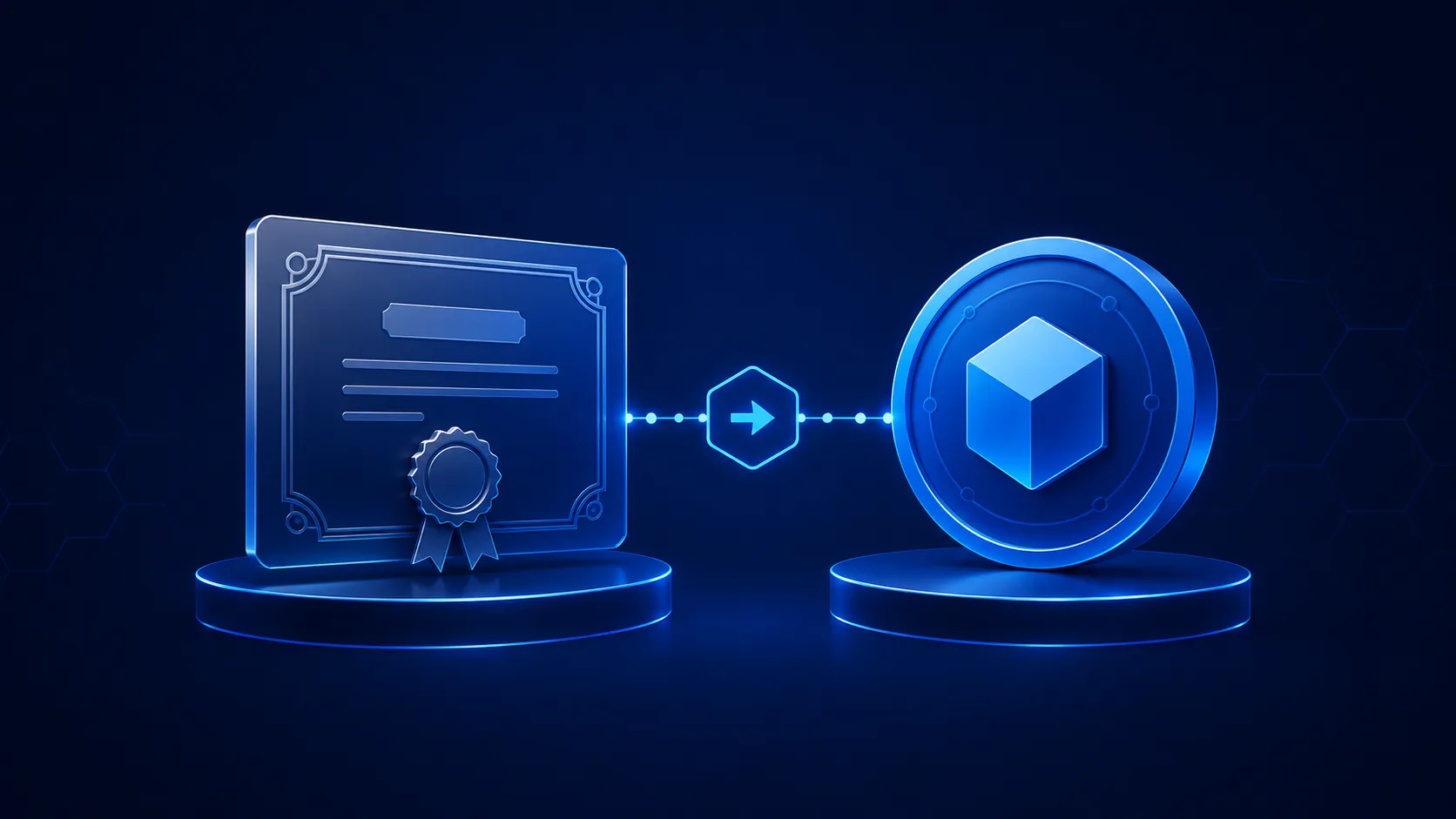
Tokenised stocks are derivatives contracts that manage and track the value of traditional company shares on a blockchain network. Essentially, these assets act as a bridge between the world of traditional finance (TradFi) and the decentralised world of Web3.
Each token mirrors the real-time value of an underlying real-world stock. When you hold a tokenised stock, you’re interacting with a digital version of an asset within a crypto-native environment. This allows for a more seamless integration into digital portfolios alongside other cryptocurrencies.
A core benefit of this technology is ‘fractionalisation’. In traditional markets, high share prices can often prevent smaller traders from gaining exposure to a diversified portfolio. However, because tokens can be split into micro-fractions, you can get price exposure to a tiny piece of a share rather than needing to fund the full price of a whole unit.
To understand how tokenised stocks work, you have to look at the underlying mechanics of issuance and trading. The process moves the management of an asset away from manual, legacy systems and onto a distributed ledger.
The mechanics behind tokenised stocks rely on the transparency and automation of distributed ledger technology. Unlike traditional systems that rely on manual record-keeping and intermediaries, tokenised stocks use smart contracts to automate the supply and issuance of tokens.
These smart contracts ensure that the digital token behaves according to pre-defined rules, while the blockchain provides an unchangeable, public record of every transaction. This eliminates the need for complex clearinghouse processes, allowing transactions to settle in near real-time.
Understanding how these digital assets are structured is vital for any trader. Generally, they fall into two main categories:
While both options offer exposure to the performance of a company, the infrastructure supporting them is worlds apart. Traditional stocks are bound by the limitations of legacy banking, while tokenised assets leverage the efficiency of the blockchain.
Traditional stocks | Tokenised stocks | |
Market hours | Generally restricted to business hours | Often trade 24/7 |
Settlement time | Usually two days after the transaction | Near-instant on the blockchain |
Accessibility | Strict jurisdictional barriers | Global and borderless access |
Minimum purchase | Often requires whole shares | Easy fractional exposure |
The most visible benefit is the 24/7 nature of blockchain trading. Traditional exchanges normally close at night and on weekends, which can be frustrating if major news breaks during those times. Tokenised assets allow you to get market exposure whenever the inspiration strikes.
Fractional ownership is a highly inclusive feature of this technology. If a single share of a company costs thousands of dollars, it remains out of reach for many. With tokenisation, a trader can get price exposure to a small fraction of that same asset, allowing for much finer control over portfolio weightings.
Blockchain provides a verifiable proof of asset history and ownership. Because every transaction is recorded on a public ledger, it mitigates many of the opaque practices that can sometimes occur in traditional clearing and settlement processes.
Many traditional assets are considered ‘illiquid’ because they’re difficult to sell quickly without affecting the price. By breaking these assets down into smaller, highly tradable digital units, tokenisation may improve overall market liquidity.
Foris DAX, Inc., and other affiliated Foris companies are separate entities from Foris Capital and do not engage in the securities business. Customer balances and crypto holdings held and transacted at Crypto.com and other entities outside of Foris Capital are not covered by SIPC insurance and are separate from securities transactions and holdings at Foris Capital. For further information about Foris Capital, please visit FINRA BrokerCheck. Clearing Services are offered by Apex Clearing, a member of FINRA, and SIPC.
All investments involve risk, and not all risks are suitable for every investor. The value of securities may fluctuate and as a result, clients may lose more than their original investment. Past performance does not guarantee future results.