

Market
NEAR Protocol
Buy
Sell
One time
USD

NEAR
≈
2.3378
NEAR
$50
$150
$500
Pay with
Google Pay
Apple Pay

USD Account
1-2 business days • No fees
Credit/debit card
Instant •
2.99%
0% fee first 30 days
Market
NEAR Protocol
Buy
Sell
One time
USD
NEAR
≈
2.3378
NEAR
$50
$150
$500
Pay with
Google Pay
Apple Pay
USD Account
1-2 business days • No fees
Credit/debit card
Instant •
2.99%
0% fee first 30 days
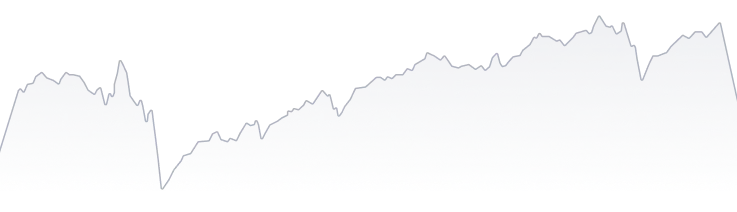
| Time | Price | Change |
|---|---|---|
| Today | 0.00% | |
| 1 day | -$0.12 (1.63%) | |
| 1 week | +$1.70 (67.90%) | |
| 1 month | +$2.32 (121.66%) | |
| 1 year | +$1.36 (60.78%) |
Explorers
View
Whitepaper
View
Website
View
Source Code
View
Markets
View
Sustainability Disclosure
View
NEAR
$4.2776
-1.63%

NEAR Protocol: Fast & Cheap, Sharding, AI Agents & Why It's Different this time.
Youtube Video
21 hrs ago

NEAR price outlook strengthens as Hyperliquid adds spot market
crypto.news
14 hrs ago
Market cap
$5.59B
Rank
#21
24H volume
$3.09B
Circulating supply
1.31B NEAR
100% of total
All-time high
$20.42
-377.33%
All-time low
$0.53
87.70%
Total supply
1.31B NEAR
NEAR Protocol is created by the NEAR Collective as a community-run cloud computing platform that can achieve up to 100,000 transactions per second. It also features human-readable addresses and a more straightforward onboarding process for DApp (decentralised application) developers. Blockchain projects being built on NEAR Protocol include marketplace creation platform Flux and NFT minting platform Mintbase.
NEAR Protocol is the brainchild of Alexander Skidanov and Illia Polosukhin. Founded in 2017, NEAR Protocol started out as a machine learning project before it became a blockchain development platform. In its first 4 months, NEAR managed to raise US$50 million, despite not having even begun development. The network launched in April 2020, became community-operated in September 2020, and launched its mainnet in October 2020. In January 2022, NEAR announced that it had raised $150 million in seed investments to accelerate the adoption of Web3 technologies.
NEAR Protocol uses proof of stake (PoS) consensus to secure and validate transactions on the blockchain. Its unique selling proposition is its Nightshade technology, a variation of sharding, that enables individual sets of validators to process transactions in parallel across multiple chains. In effect, Nightshade improves the overall capacity of the blockchain and makes its 100,000 transactions-per-second network speed possible. NEAR also has its own consensus mechanism, called Doomslug.
NEAR, the native token of the NEAR Platform, is mainly used by validators for staking and is distributed as rewards to these validators in exchange for serving the network. NEAR also serves as the core medium of exchange within the platform’s ecosystem.

Earn up to 2.5% p.a. with regular payouts

Make investing stress-free

Trade with deep liquidity and low fees