

Markt
Gala
Kaufen
Verkaufen
Einmalig
RUB

GALA
≈
47.1922
GALA
₽50
₽150
₽500
Zahlen mit
Google Pay
Apple Pay

USD Konto
1-2 Werktage • Keine Gebühren
Credit/debit card
Sofort •
2.99%
0% Gebühr in den ersten 30 Tagen
Markt
Gala
Kaufen
Verkaufen
Einmalig
RUB
GALA
≈
47.1922
GALA
₽50
₽150
₽500
Zahlen mit
Google Pay
Apple Pay
USD Konto
1-2 Werktage • Keine Gebühren
Credit/debit card
Sofort •
2.99%
0% Gebühr in den ersten 30 Tagen
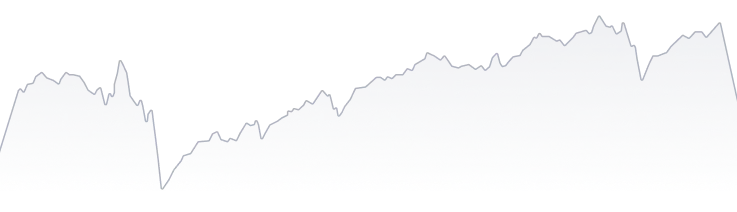
| Zeit | Kurs | Ändern |
|---|---|---|
| Heute | 0.00% | |
| 1 Tag | +₽0.001 (0.03%) | |
| 1 Woche | +₽0.02 (7.71%) | |
| 1 Monat | +₽0.05 (32.55%) | |
| 1 Jahr | -₽1.19 (84.93%) |
Explorer
Anzeigen
Whitepaper
Anzeigen
Webseite
Anzeigen
Märkte
Anzeigen
Offenlegung der Nachhaltigkeit
Anzeigen
GALA
₽0.2119
+1.86%
Marktkapitalisierung
₽10.69B
Rang
#177
24H-Volumen
₽2.72B
Umlaufversorgung
50.47B GALA
100% von insgesamt
Allzeithoch
₽55.51
-26098.6%
Gesamtangebot
50.47B GALA
Max. Versorgung
50.47B GALA
Gala (GALA) is a functional utility token that works as a medium of exchange amongst Gala Games ecosystem players. GALA is now based on the Ethereum blockchain and adheres to the ERC-20 standard.
Blockchain gaming platform Gala Games was launched in 2020 by founders Eric Schiermeyer and Michael McCarthy to create a gaming environment that gives its players complete ownership and control over their in-game assets.
Schiermeyer was formerly a part of Intermix Media, the business behind MySpace, and the co-founder of Zynga, a billion-dollar company founded in 2007 to connect the world through games. McCarthy was the creative director of Zynga, where he created Farmville 2, a popular Facebook game. Early on, the two identified the potential of play-to-earn games, which give consumers the power to earn lucratively and enable producers to genuinely concentrate on game quality.
Gala Games prioritised decentralisation from the get-go, leading the company to reject an early distribution, such as an initial coin offering (ICO) or presale, in order to allow for an organic release of the tokens via its node network. For this to happen, Gala’s initial plan of action was to expand the gaming network by selling ‘Founder’s Nodes’, which form the basis of Gala Games’s ecosystem. These nodes give rewards via Gala tokens, NFTs, and governance authority.
Today, Gala is focused on creating its proprietary blockchain GalaChain, building partnerships, and acquiring popular gaming companies. GalaChain was created to significantly cut network costs and provide higher scalability than Ethereum. Gala has also made progress in developing ties with companies like Frank Miller, Under Armour, and AMC’s The Walking Dead, with many more on the way. Gala Games intends to upend the free-to-play model popularised by Fortnite, in which players rented in-game goods from the developer.
The GALA token has a fixed maximum supply of 50 billion units. Out of this, close to 7 billion GALA are currently circulating. This represents about 14% of the maximum total. Gala Games has a staggering 1.3-plus million active users.
The Gala Games ecosystem includes a bespoke utility and governance token, a responsive blockchain, and NFT technology. Developers may use these tools to build on the network.
Players in the Gala Games ecosystem may possess non-fungible tokens (NFTs) and influence game management. The Founder’s Nodes voting mechanism enables players to influence which games Gala develops and which games get funded. Gala Games employs its utility token, GALA, and purchases NFTs for specific games.
Developers use Gala’s blockchain technology to design better and more lucrative titles. The network hopes to accommodate the most recent and immersive metaverse opportunities to create more enjoyable blockchain-powered games.
Gala aims to give players a cut of the billions of dollars produced by gaming platforms. The network seeks to make it possible for users to extract value from the gaming ecosystems in the form of NFTs and other digital assets, for both Gala blockchain’s supporters and players. The supporters, specifically those who run network nodes, are paid GALA tokens in exchange for their work in powering the Gala ecosystem and peer-to-peer transactions. Meanwhile, players may leave the gaming environment and swap their things for other popular cryptocurrencies on several decentralised exchanges (DEXs). These players can also choose to buy more NFTs and in-game items using GALA tokens.
Sorgen Sie für stressfreies Investieren
Trading mit hoher Liquidität und niedrigen Gebühren