

Marché
XRP
Acheter
Vendre
1 fois
USD

XRP
≈
7.1136
XRP
$50
$150
$500
Payer avec
Google Pay
Apple Pay

USD Compte
1-2 jours ouvrables • Sans frais
Credit/debit card
Instantané •
2.99%
0% les 30 premiers jours

Marché
XRP
Acheter
Vendre
1 fois
USD
XRP
≈
7.1136
XRP
$50
$150
$500
Payer avec
Google Pay
Apple Pay
USD Compte
1-2 jours ouvrables • Sans frais
Credit/debit card
Instantané •
2.99%
0% les 30 premiers jours
FAQ sur XRP
Explorateurs
Afficher
Livre blanc
Afficher
Site web
Afficher
Code source
Afficher
Marchés
Afficher
Divulgation sur la durabilité
Afficher
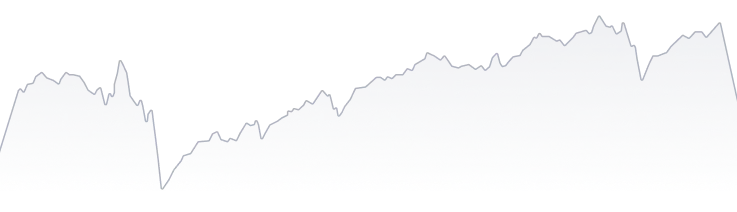
| Temps | Prix | Variation |
|---|---|---|
| Aujourd'hui | 0.00% | |
| 1 jour | +$0.0035 (0.24%) | |
| 1 semaine | -$0.12 (7.77%) | |
| 1 mois | +$0.04 (2.91%) | |
| 1 an | -$1.01 (41.72%) |
XRP
$1.4058
+0.24%
Cap. de marché
$88.75B
Rang
#5
Volume 24H
$1.19B
Offre en circulation
63.13B XRP
63% du total
Sommet historique
$3.84
-173.29%
Creux historique
$0.00
99.80%
Offre totale
99.99B XRP
Offre max.
100B XRP

XRP $94,000,000,000 HACK !!!! 184,000,000,000,000 XRP SUPPLY !!!!
Vidéo Youtube
3 hrs ago

XRP, Bitcoin, Ethereum Prices Fall as ETF Inflows Slow Ahead of US Inflation Data
Crypto.com Rss Feed
10 hrs ago
XRP is a digital asset native to the XRP Ledger, which is an open-source, decentralized blockchain. It was created in 2012 with the specific purpose of facilitating payments and can settle transactions in 3 to 5 seconds.
XRP is the native cryptocurrency of the XRP Ledger (XRPL), a public and decentralized blockchain designed by Jed McCaleb, Arthur Britto, and David Schwartz. The ledger was launched in June 2012 with the goal of being a more sustainable digital asset built specifically for payments. Today, XRP is one of the largest cryptocurrencies by market capitalization.
The XRP Ledger is a Layer 1 blockchain optimized for the efficient tokenization and exchange of both crypto-native and real-world assets. The network processes XRP transactions using a consensus algorithm, rather than the energy-intensive Proof of Work (PoW) used by Bitcoin. This means that XRP does not require mining.
The integrity of the XRPL is maintained by a group of trusted nodes, known as the Unique Node List (UNL). To be included in the ledger, a transaction must be verified by at least 80% of the nodes on the network. Anyone can become a validator, and there are over 100 nodes operated by various universities, exchanges, businesses, and individuals.
XRP's primary uses are to facilitate transactions on the XRP Ledger, serve as a bridge currency for different currencies within the XRPL's native decentralized exchange (DEX), and protect the ledger from spam. It is particularly known for its fast transaction times and low fees, making it an attractive option for cross-border payments and remittances.
Investissez sans stress

Négociez avec une liquidité importante et des frais réduits