Crypto airdrops are free token distributions used to reward early adopters, promote new projects or encourage community growth. This guide explains what airdrops are, how they work in 2025, the types you might encounter and the safest ways to claim them.

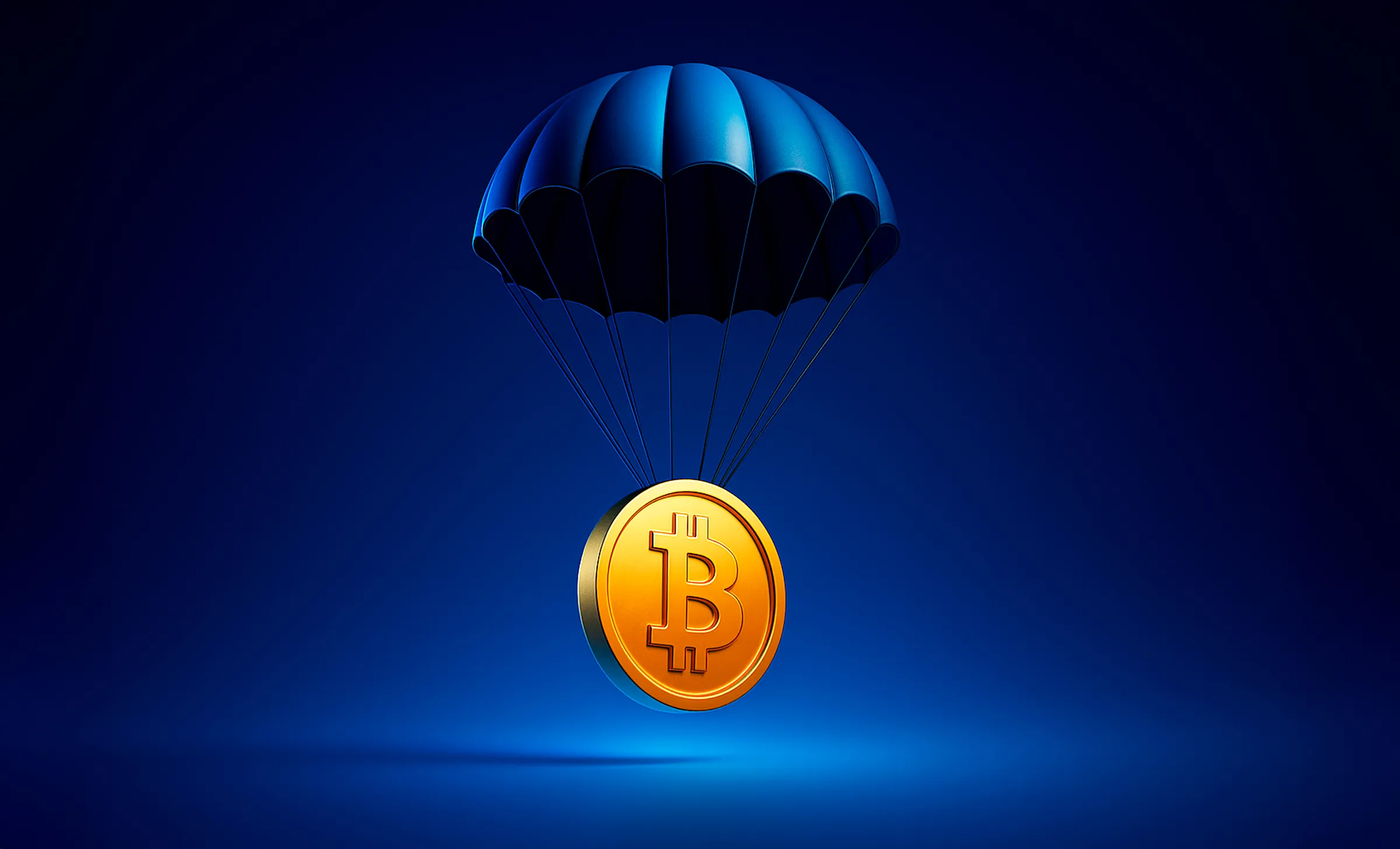
A crypto airdrop is a marketing strategy where blockchain projects distribute free tokens to multiple wallet addresses simultaneously. These digital token giveaways have become a notable part of cryptocurrency adoption, offering users opportunities to receive tokens without paying for them directly.
Unlike traditional financial giveaways, crypto airdrops use blockchain technology to distribute tokens to eligible wallet addresses. Projects use airdrops to build communities, reward early users and decentralise token ownership across a broader user base.
Etymologically, the term ‘airdrop’ comes from the military concept of dropping supplies from aircraft to ground forces.
Airdrops gained prominence in 2020 when Uniswap distributed 400 UNI tokens to every user who had previously used their decentralised exchange. This retroactive airdrop rewarded early adopters and demonstrated the impact token distribution can have as a growth strategy.
Projects today conduct airdrops for several strategic reasons:
Airdrops differ significantly from Initial Coin Offerings (ICOs) and token launches. ICOs usually require users to buy tokens with existing cryptocurrency, while airdrops distribute tokens freely. And traditional token launches typically involve public sales or exchange listings, whereas airdrops can bypass these mechanisms.
Staking rewards also differ from airdrops, as staking typically requires users to lock up existing tokens to earn rewards. Airdrops may not require initial token ownership, which can make them accessible to users regardless of their current cryptocurrency holdings.
Create a wallet that supports airdrops
Crypto airdrops work through technical mechanisms designed to identify eligible recipients and distribute tokens efficiently. The most common method involves blockchain snapshots, where projects record wallet addresses and balances at specific block heights or timestamps.
Snapshot-based airdrops capture user activity data at predetermined moments (hence the ‘snapshot’). Projects then analyse transaction history, token holdings and platform interactions to determine eligibility, with smart contracts distributing tokens to qualifying addresses based on predefined criteria.
Claim mechanics vary depending on project requirements. For example, some airdrops automatically deposit tokens into eligible wallets, while others require users to actively claim their tokens through official websites or applications. Time-sensitive claims with expiry dates are also common, typically ranging from 30 days to several months.
Wallet requirements also play a crucial role in airdrop participation, because most projects require self-custodial wallets where users control private keys and compatible wallets must support the specific blockchain network hosting the airdrop tokens. By contrast, exchange wallets may not support airdrops since users don’t directly control these addresses.
Set up a compatible self-custodial wallet
Beyond wallets, Know Your Customer (KYC) procedures are increasingly accompanying airdrop campaigns, because compliance requirements may mandate identity verification before tokens can be distributed. Users should prepare standard ID documents (such as a passport or driving licence) but also be cautious of projects requesting excessive personal information.
Finally, smart contracts handle the technical distribution process. These programmes automatically execute predetermined rules without human intervention, aiming to ensure a transparent token allocation. It’s worth noting that gas fees may apply when claiming tokens, particularly on networks like Ethereum during high congestion periods.
Some airdrops have reshaped the cryptocurrency landscape, demonstrating the potential value of free token distributions:
It’s important to distinguish between the two key types:
Participating in crypto airdrops requires preparation and ongoing engagement with blockchain projects:
Open a self-custodial wallet that supports the relevant blockchain networks and tokens. For example, MetaMask offers broad compatibility with Ethereum and EVM-compatible chains, while Trust Wallet provides mobile-friendly access to blockchain networks. Crypto.com also offers a self-custodial wallet option.
Critically, you need to configure your wallet with strong security practices. Enable two-factor authentication where available and never share seed phrases or private keys. You might also want to create separate wallets for different activities to compartmentalise risk and organise airdrop participation.
Identify emerging decentralised applications (dApps) and protocols that may conduct future airdrops and focus on platforms with strong development teams, growing user bases and significant backing. Layer-2 solutions, DeFi protocols and non-fungible token (NFT) marketplaces frequently reward early users.
Then, if you can, simply be active. Generate transaction volume through legitimate platform usage, swap tokens on decentralised exchanges, provide liquidity to pools, bridge assets between networks and participate in governance votes. But avoid artificial activity that appears obviously motivated by airdrop speculation.
Participate in protocol governance when possible, including voting on proposals, delegating tokens to validators and engaging in community discussions. Many projects prioritise governance participants in their token distributions.
Join promising dApps and stay active
Track upcoming airdrops through dedicated platforms and community resources. For example, AirdropAlert aggregates announced and rumoured airdrops with eligibility requirements while DeFiLlama provides protocol analytics and airdrop tracking features.
Follow project social media accounts for official announcements. X, Discord servers and Telegram channels often provide early airdrop news, especially if you enable notifications for projects you’re actively using. However, be careful to verify information independently before acting on community tips.
Track upcoming airdrops on trusted platforms
You need to execute any required actions during announced airdrop campaigns. Connect wallets to official project websites, complete tasks, bridge tokens between networks and fulfil minimum transaction requirements. Make sure to document your participation to refer to during claim periods.
Maintain activity levels on platforms you’re monitoring for potential airdrops. Regular usage demonstrates genuine interest rather than purely speculative behaviour. Diversify your activities across multiple platforms to increase overall airdrop exposure.
Prepare for snapshot requirements by ensuring your wallet contains necessary tokens or meets activity thresholds. Some projects require minimum balances or specific token holdings during snapshot periods.
Claim your tokens only from verified sources
Claim airdropped tokens only through official project websites and verified links. Bookmark official URLs and verify domain authenticity before connecting wallets, because phishing attacks frequently target airdrop participants with fake claiming websites.
Always review transaction details carefully before confirming claims. Verify recipient addresses, token contracts and gas fees before signing transactions. Legitimate airdrops never request seed phrases, private keys or upfront payments.
Store claimed tokens securely and consider any tax implications of receiving cryptocurrency. Make sure to research your new token’s project fundamentals before making any trading decisions.
Trade your airdropped tokens on Crypto.com
Finding legitimate airdrops requires careful research and a healthy dose of scepticism about all opportunities. Legitimate projects demonstrate transparency, have verifiable development teams and maintain active community engagement:
It’s important to be aware of red flags which may indicate potential scams or illegitimate airdrops.
Requests for seed phrases, private keys or upfront payments, or promises of guaranteed returns or extremely high token values almost always indicate scams. You might also consider poor website design, spelling errors and anonymous teams as risk factors.
Crypto airdrops carry risks that participants must understand and try to mitigate through proper security practices and legal awareness. While legitimate airdrops may involve limited direct cost, associated activities can expose users to various threats:
What is a crypto airdrop?
A crypto airdrop is the free distribution of cryptocurrency tokens to multiple wallet addresses simultaneously. Projects use airdrops to reward users, build communities and distribute tokens more broadly across the cryptocurrency ecosystem.
Why do people give away free crypto?
Projects distribute free tokens to achieve decentralisation goals, reward early adopters, generate marketing buzz and build active user communities. Airdrops help projects establish token economies and incentivise platform usage without requiring upfront investments from users.
How can I become eligible for airdrops?
Become eligible by using DeFi platforms, maintaining active wallet addresses, participating in protocol governance, bridging tokens between networks and engaging with project communities. Consistent platform usage and community participation can improve eligibility, but criteria vary by project.
How do I know if a crypto airdrop is legit?
Legitimate airdrops come from projects with transparent teams, active development and official announcements through verified channels. Avoid airdrops requesting seed phrases, upfront payments or making unrealistic return promises.
Can I make money from airdrops?
Some airdrops can provide meaningful value, but outcomes vary widely. Many tokens may have limited value or liquidity on distribution, and token prices can be volatile.
How long does a crypto airdrop typically take?
Airdrop timelines vary from immediate automatic distributions to multi-month claiming periods. Snapshot-based airdrops may distribute tokens within days, while complex campaigns with tasks or KYC requirements can take weeks or months.
What’s the difference between airdrops and staking?
Airdrops distribute tokens based on past activity or completing tasks, often without requiring users to lock assets. Staking typically requires users to lock existing cryptocurrency to earn rewards over time. Airdrops are usually one-off distributions, while staking can provide ongoing rewards.
Can anyone participate in airdrops?
Most airdrops have specific eligibility requirements such as wallet activity, geographic location or platform usage. Some airdrops exclude users from certain countries due to regulatory restrictions. KYC requirements may limit participation to verified users.
What’s the easiest way to find new airdrops?
Follow airdrop tracking websites, monitor DeFi analytics platforms, join crypto communities on Discord and Telegram, follow project social media accounts and stay active on blockchain platforms to discover opportunities early.
Important Information: This is informational content sponsored by Crypto.com and should not be considered as investment advice. Trading cryptocurrencies carries risks, such as price volatility and market risks. Before deciding to trade cryptocurrencies, consider your risk appetite. If you use a non-custodial wallet, you are responsible for securely storing your seed phrase. Losing it may result in loss of access to your assets. Note that third-party information is subject to change.