

Market
Decentraland
Buy
Sell
One time
RUB

MANA
≈
1.272
MANA
₽50
₽150
₽500
Pay with
Google Pay
Apple Pay

USD Account
1-2 business days • No fees
Credit/debit card
Instant •
2.99%
0% fee first 30 days
Market
Decentraland
Buy
Sell
One time
RUB
MANA
≈
1.272
MANA
₽50
₽150
₽500
Pay with
Google Pay
Apple Pay
USD Account
1-2 business days • No fees
Credit/debit card
Instant •
2.99%
0% fee first 30 days
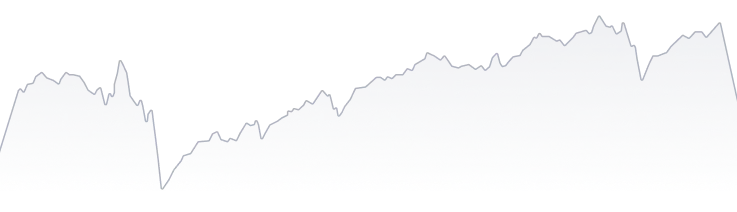
| Time | Price | Change |
|---|---|---|
| Today | 0.00% | |
| 1 day | +₽0.13 (1.46%) | |
| 1 week | -₽0.77 (8.98%) | |
| 1 month | +₽1.54 (25.29%) | |
| 1 year | -₽16.12 (68.15%) |
Market cap
₽15.61B
Rank
#140
24H volume
₽1.32B
Circulating supply
1.99B MANA
91% of total
All-time high
₽398.83
-4973.20%
All-time low
₽0.07
99.05%
Total supply
2.19B MANA
MANA
₽7.8616
+1.21%
Explorers
View
Whitepaper
View
Website
View
Source Code
View
Sustainability Disclosure
View
Decentraland is a virtual reality (VR) platform fueled by the Ethereum blockchain. Users can create, experience, and monetise content and applications. Its native digital token MANA is an ERC20 token used to pay for virtual plots of land in its metaverse along with goods and services. As a fungible token, MANA is interchangeable with other ERC20 tokens. Decentraland comprises consensus, land content, and real-time layers that connect the smart contract infrastructure to real-time visualisation and gaming for users.
Ariel Meilich and Esteban Ordano co-founded Decentraland, which launched in August 2017. The duo arranged collaborations with several companies such as Binance and Samsung for their metaverse project. The co-founders have since stepped down from management positions in the project but still act as advisors.
When Decentraland debuted, digital land parcels cost about US$20, and MANA tokens cost $0.02. Genesis City, the game's initial map, was made up of 90,601 parcels of land. In 2017, the project raised $26 million in its initial coin offering (ICO).
Users may buy and trade LAND, Estates, Avatar wearables, and names in the Decentraland Marketplace, which stocks several digital products and paraphernalia supported by the Ethereum blockchain.
Decentraland employs two tokens, LAND and MANA, to enable users to engage with the platform. Non-fungible LAND tokens carry coordinates of a single point on the grid, reference each parcel's data, and represent the individual ownership of land parcels. A ledger keeps a smart contract's ownership data. Users must burn ERC20 MANA tokens to get LAND, and MANA tokens can buy in-game items and services.
Decentraland consists of numerous layered components constructed using Ethereum smart contracts. This consensus layer keeps a ledger that tracks who owns which land parcels. Each LAND parcel has a unique place in the virtual world, an owner, and a reference to a description file representing the parcel's unique content. This content layer governs what occurs inside each parcel and comprises the three files that are necessary to render them:
Content Files: referencing all static audio and visuals
Script Files: defining the placement and behaviour of the referenced content
Interaction Definition: peer-to-peer interactions such as gesturing, voice chat, and messaging.
Finally, the real-time layer supports social interactions inside Decentraland, where users use avatars, including voice chat and messaging.
The Decentraland design application keeps track of real estate parcels specified by LAND tokens. The programme uses the Ethereum blockchain to monitor ownership of the digital land. Users can use their MANA token in an Ethereum wallet to participate in its ecosystem. Furthermore, developers have the freedom to innovate inside Decentraland's platform by defining the animation and interactions that users encounter on their virtual real estate.
Decentraland's primary usage right now is as a game. While Decentraland has many applications, such as virtual business development, the video game has come first.
Hence, MANA is mainly utilised as in-game money, as it allows users to purchase and sell goods inside the game.
Many people believe that the metaverse will become more beneficial in the future. In a metaverse, events such as video chats and concerts may occur. Decentraland hopes to introduce its technologies to a much larger user base and integrate the initiative into daily living.

Decentraland MANA Crypto Prediction - 10 October 2026
Youtube Video
3 days ago
Make investing stress-free
Trade with deep liquidity and low fees