If you want to have your Pokémon cards graded, you'll need a reputable third party to do it. Learn about choosing a service, checking your card before sending it and the costs involved. We also cover when grading may not be worth it.

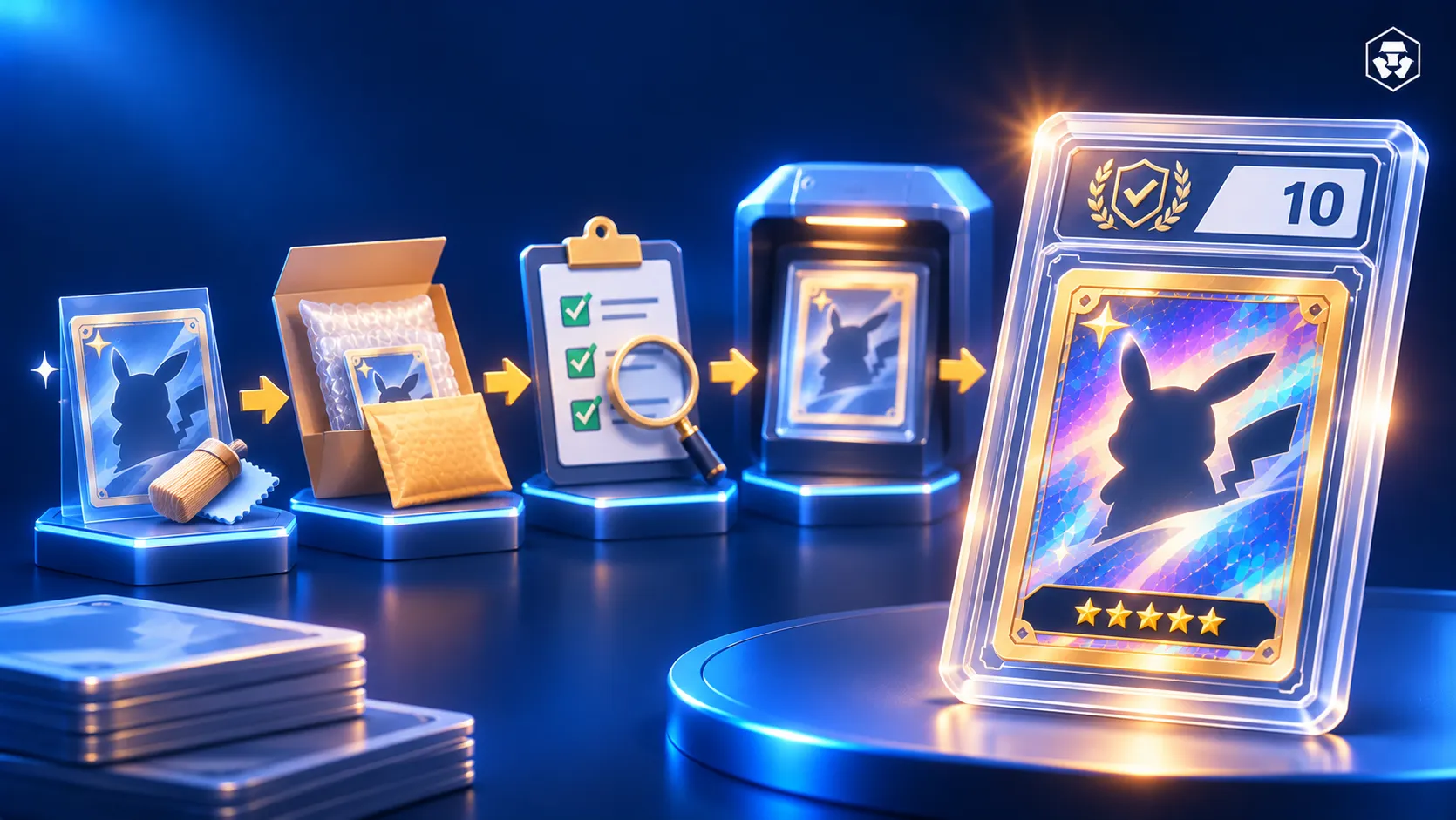
Getting a Pokémon card graded means an official third-party company authenticates it and assesses its condition. Authentication will always come first. If a card is found to be fake, it won't be graded. At PSA, for example, grading can only take place after a card has been deemed authentic.
PSA scores condition on a 10-point scale. According to PSA, since 2018, about 90% of the modern trading card game (TCG) cards it has graded (2003 to the present) received an 8 or higher. It also notes that some vintage cards are still very valuable even in a low grade.
How to see if your Pokémon cards are authentic
You might miss small defects. The grading company will assess every detail of a card, including those not visible to the naked eye, so a home check can't predict a grade.
Here's the usual order of getting a card graded
Compare each tier on three things: the fee per card, the maximum value it allows and the estimated turnaround. PSA, CGC Cards and Beckett are three of the companies that grade trading cards.
Each company sets its own tiers, so check its current pricing page. Prices for the same card may also differ by grading company, so it can help to compare sold listings for the exact card in each company's holder.
Fees vary by company and tier, and a tier's price tends to rise as its turnaround estimate gets shorter. Then you also have to add shipping, insurance and supplies like sleeves and holders to your total.
Below are the figures that the companies have listed as of November 6, 2026. Note that the turnaround times aren't guaranteed.
Grading Pokémon cards may be worth it when the price gap between a graded and a raw card clearly exceeds your total cost. It may not be when that gap is small, because fees, shipping and supplies can take up most of it.
Here's a hypothetical example, for illustration only. Say a card sells raw for $20 and a PSA 9 sells for $45. If your total cost is $55, grading costs more than the gap adds, even with a good grade.
Grading may not justify the cost when:
Cost isn't the only reason to grade. Any card, including a modern one, could be worth grading because of rarity, scarcity or sentimental value.
Read more on Pokémon card rarity
Online card ripping is a way to collect cards by opening digital packs on a ripping platform instead of buying physical cards. On these platforms, cards are typically backed by physical collectibles.
Sell-back prices may be offered at a discount to a card's stated value, so it's worth reading the terms and quotes before you open a card pack.
Crypto.com Rips is an online ripping platform available in the Crypto.com App. You open a digital pack, watch the animated reveal and see each card's details and a buyback quote.
You can either sell the cards back and receive money in your fiat wallet, request delivery of the physical card or hold it for 48 hours. If you don't ship or sell in that window, the card sells automatically at the quoted price.
Card collectibles have taken off as hobbyists and first-timers alike amass their collections or flip it for gains.
Try your hand at the Rips experience and get your first 5 packs free of charge. Find out more details.
* Availability may vary by jurisdiction.
Pokémon card grading is a service where a third-party company checks whether a card is genuine, assesses its condition and assigns a grade. PSA, for example, uses a 10-point scale, with PSA 10 being awarded to cards that meet its Gem Mint standards. Even cards that appear flawless may receive a lower grade due to subtle imperfections.
Start by checking your card's condition and estimated value. Choose a grading company and service tier, complete its online submission form and package your card according to its instructions. Once submitted, you can track its progress until it's returned.
PSA, CGC Cards and Beckett are established trading card grading companies. Each has its own grading standards, fees and turnaround estimates, so compare their services before submitting.
Grading can take anywhere from several business days to several months, depending on the company and service tier. Faster services tend to cost more, and published turnaround times are estimates rather than guarantees.
Yes, even newly opened Pokémon cards can have collectible value, particularly if they're rare or sought after. However, a card pulled straight from a pack isn't guaranteed a high grade, as manufacturing imperfections can affect its condition.
No, grading can affect a card's resale value, but a higher selling price isn't guaranteed. Consider the card's market value, likely grade and grading costs when deciding whether to submit it.
Important information: This article is for informational purposes only and should not be construed as financial or investment advice.
The Crypto.com Rips service is provided by Foris Inc. subject to the Crypto.com Rips Terms and Conditions and the Crypto.com App Terms and Conditions. You must be 18+.