

Market
Neo
Buy
Sell
One time
TWD
NEO
≈
0.13395424
NEO
$50
$150
$500
Pay with
Google Pay
Apple Pay

USD Account
1-2 business days • No fees
Credit/debit card
Instant •
2.99%
0% fee first 30 days

Market
Neo
Buy
Sell
One time
TWD
NEO
≈
0.13395424
NEO
$50
$150
$500
Pay with
Google Pay
Apple Pay
USD Account
1-2 business days • No fees
Credit/debit card
Instant •
2.99%
0% fee first 30 days
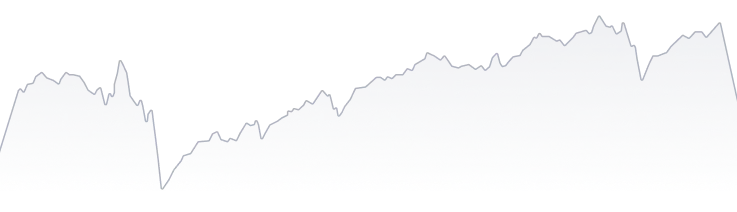
| Time | Price | Change |
|---|---|---|
| Today | 0.00% | |
| 1 day | -$6.56 (6.57%) | |
| 1 week | -$7.45 (7.67%) | |
| 1 month | +$4.60 (8.35%) | |
| 1 year | -$118.04 (60.95%) |
NEO
$74.652
-6.36%
Market cap
$5.27B
Rank
#150
24H volume
$165.5M
Circulating supply
70.54M NEO
71% of total
All-time high
$5125.11
-6765.33%
All-time low
$2.19
97.07%
Total supply
100M NEO
Explorers
View
Whitepaper
View
Website
View
Source Code
View
Markets
View
Sustainability Disclosure
View
The NEO token is the cryptocurrency that allows the production of digital assets and smart contracts on the Neo network. Users can stake NEO to create NEO GAS, Neo’s secondary token that is being used as the platform’s fuel. Users can also pay for the computation or deployment of smart contracts inside the Neo network.
Formerly known as Antshares and referred to as the ‘Chinese Ethereum’, Neo was China’s first open-source blockchain platform. Its design goal is to make it simple to build a digital economy complete with digital identities, assets, contracts, and payments.
Neo aims to compete with Ethereum and other projects that promote developer-friendly decentralised protocols to lay the groundwork for a future digitised ‘smart’ economy. It intends to implement quantum-computing resistance and inter-chain operability features to create the most competitive distributed ‘smart economy’ network. Neo uses a delegated Byzantine Fault Tolerance (dBFT) consensus mechanism and can support up to 10,000 transactions per second.
Neo was founded in 2014 under the name Antshares. Founders Da Hongfei and Erik Zhang hoped to provide a more easily scalable, versatile platform that backed a wide range of programming languages compiled in a secure executable environment now known as the Neo virtual machine (NeoVM).
A total of 100 million Neo were created in the Genesis Block. Antshares conducted two phases of ICOs, one in October 2015, which raised 2,100 BTC, and another in September 2016, which earned 6,119 BTC. The project also partnered with Microsoft to work on research and development, focusing on the latter specifically with their Azure Platform-as-a-Service (Paas). The project’s mainnet launched in October 2016.
Antshares was renamed to Neo in June 2017. This rebrand was followed by the launch of Neo 2.0, featuring a full smart contract system for the blockchain network. Soon after, in July 2018, Neo founder Erik Zhang announced plans to build Neo 3.0, which features platform-native decentralised storage and oracles, as well as improvements to its economic and governance models. Neo 3.0 launched in August 2021, more than three years after its introduction.
The NEO token currently has a circulating supply of 70,538,831 and a maximum supply of 100,000,000.
Organisations like Shibumi Crypto Capital Digital Asset Fund, Myriad Capital Management, Midgard Ventures, and Digichain Capital are investors in NEO.
Neo provides a new and different contract system known as NeoContracts, which differs from other smart contract-based protocols because developers may build applications in a range of current popular languages rather than learning a new language. As a result, NeoContract’s ability to function across many programming languages may be attractive to a larger pool of developers seeking to build or support decentralised apps (dapps). Neo employs the dBFT consensus mechanism approach to protect its blockchain and keep its distributed network of computers in sync.
Like delegated proof of stake (DPoS), dBFT leverages a real-time voting system to select which computers running the software may construct the next block on the Neo blockchain. This system implies that everyone with NEO may contribute to the network’s operation.
Neo’s platform allows developers to utilise its software to run smart contracts (called NeoContracts) to replicate new dapps that mimic real-world products and services. It aims to be a more flexible alternative to Ethereum. The organisation employs a design philosophy that assesses design options throughout a multivariate spectrum. In this context, the NEO token serves as the governance token of the Neo platform.
Each NEO token may be locked or staked to symbolise a vote on proposals made for changes in the Neo network. All NEO owners who stake their coins vote for the consensus nodes, which are in charge of producing blocks. Consensus nodes earn network transaction fees for proposing and adding new blocks to the Neo blockchain (paid in GAS cryptocurrency).
Neo may then alter its market strategy appropriately, based on the voting results on the network proposals. For example, Neo developers may choose the right amount of decentralisation/centralisation for a project according to the use case. They may also make comparable decisions on other critical problems, like the extent of on-chain/off-chain governance. These choices offer NEO more use case possibilities for widespread adoption in commercial and governmental sectors.

Make investing stress-free