

Markt
Polkadot
Kaufen
Verkaufen
Einmalig
GBP

DOT
≈
13.0875
DOT
£50
£150
£500
Zahlen mit
Google Pay
Apple Pay

USD Konto
1-2 Werktage • Keine Gebühren
Credit/debit card
Sofort •
2.99%
0% Gebühr in den ersten 30 Tagen
Markt
Polkadot
Kaufen
Verkaufen
Einmalig
GBP
DOT
≈
13.0875
DOT
£50
£150
£500
Zahlen mit
Google Pay
Apple Pay
USD Konto
1-2 Werktage • Keine Gebühren
Credit/debit card
Sofort •
2.99%
0% Gebühr in den ersten 30 Tagen
Polkadot FAQ
DOT
£0.7641
-0.58%
Explorer
Anzeigen
Whitepaper
Anzeigen
Webseite
Anzeigen
Quellcode
Anzeigen
Märkte
Anzeigen
Offenlegung der Nachhaltigkeit
Anzeigen
Marktkapitalisierung
£1.31B
Rang
#47
24H-Volumen
£77.03M
Umlaufversorgung
1.71B DOT
100% von insgesamt
Allzeithoch
£39.91
-5122.80%
Allzeittief
£0.55
28.58%
Gesamtangebot
1.71B DOT
Max. Versorgung
2.1B DOT
Polkadot is a **sharded protocol** that enables different blockchain networks to operate together in a secure and scalable way. It is an open-source project created by the **Web3 Foundation**. Polkadot is recognized as a **layer-0 metaprotocol**, which serves as the foundational network for other layer-1 blockchains, known as "parachains" (parallel chains). It facilitates the trustless sharing of information between public and private chains, permissionless networks, oracles, and future technologies.
Polkadot was founded in 2016 by Dr. Gavin Wood, a co-founder and former CTO of Ethereum, who is also credited with coining the term "Web3." His vision was to create a network that could deliver on the scalability and interoperability that early blockchains could not. In October 2016, he published the first draft of the Polkadot white paper, outlining his plans for a new multi-chain ecosystem. In 2017, Dr. Wood and Peter Czaban of Parity founded the Web3 Foundation, which held Polkadot's first token sale in October of that year, raising $145 million. An additional $3.3 million was raised in a private token sale in 2020.
Polkadot’s multi-chain technology allows different blockchains to transfer information in a trust-free manner, even if they couldn't otherwise interconnect. This is achieved by linking these blockchains and having them share their unique features while pooling their security. The platform is built on four core components:
* **Relay Chain:** The central chain of Polkadot that provides interoperability and shared security for all connected parachains. It is responsible for the network's consensus and finality.
* **Parachains:** These are independent, application-specific blockchains that run in parallel to the Relay Chain. They have their own logic, rules, and tokens, but they inherit the security of the entire Polkadot network.
* **Parathreads:** Similar to parachains, but they offer a more flexible, "pay-as-you-go" model for projects that don't require continuous connectivity to the network.
* **Bridges:** These connect parachains and parathreads with external blockchains like Bitcoin and Ethereum, allowing for the transfer of assets and data between different ecosystems.
Polkadot's native coin, **DOT**, serves three main purposes within the network:
* **Governance:** DOT holders can participate in the network's on-chain governance, including voting on network upgrades and changes to the protocol.
* **Staking:** DOT can be staked to help secure the network and validate transactions. Stakers are rewarded for their participation.
* **Bonding:** DOT is used to bond a parachain slot, which is a required step for a project to connect its blockchain to the Polkadot Relay Chain.

Erhalten Sie bis zu 2.75% p.a. mit regelmäßigen Auszahlungen

Sorgen Sie für stressfreies Investieren

Trading mit hoher Liquidität und niedrigen Gebühren
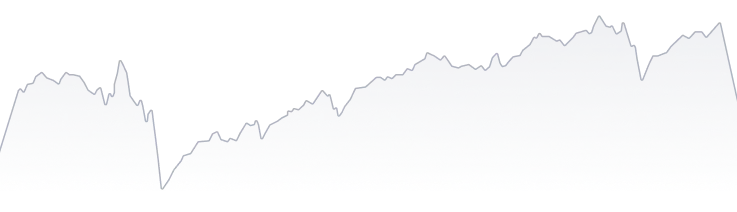
| Zeit | Kurs | Ändern |
|---|---|---|
| Heute | 0.00% | |
| 1 Tag | -£0.0063 (1.52%) | |
| 1 Woche | -£0.08 (9.67%) | |
| 1 Monat | -£0.16 (16.85%) | |
| 1 Jahr | -£1.63 (67.92%) |