

Marked
Qtum
Kjøp
Selg
En gang
USD

QTUM
≈
10.6588
QTUM
$50
$150
$500
Betal med
Google Pay
Apple Pay

USD Konto
1–2 virkedager • Ingen gebyrer
Credit/debit card
Straks •
2.99%
0 % gebyr de første 30 dagene
Marked
Qtum
Kjøp
Selg
En gang
USD
QTUM
≈
10.6588
QTUM
$50
$150
$500
Betal med
Google Pay
Apple Pay
USD Konto
1–2 virkedager • Ingen gebyrer
Credit/debit card
Straks •
2.99%
0 % gebyr de første 30 dagene
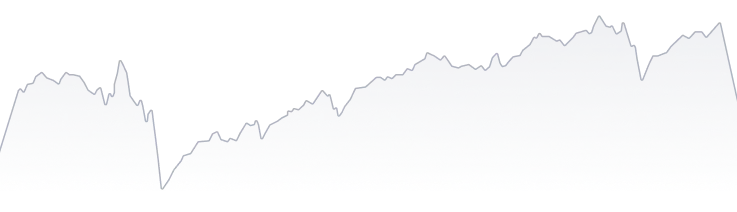
| Tidspunkt | Pris | Endre |
|---|---|---|
| I dag | 0.00% | |
| 1 dag | -$0.06 (5.35%) | |
| 1 uke | -$0.04 (3.93%) | |
| 1 måned | -$0.05 (5.37%) | |
| 1 år | -$1.14 (55.22%) |
Utforskere
Vis
Hvitbok
Vis
Nettsted
Vis
Kildekode
Vis
Bærekraftsrapportering
Vis
QTUM
$0.9382
-5.35%
Markedsverdi
$99.57M
Rangering
#185
24-timers volum
$7.42M
Sirkulerende tilbud
106.13M QTUM
98% av totalt
Tidenes høyeste
$106.88
-11291.6%
Rekordlavt
$0.63
33.06%
Totalt tilbud
107.82M QTUM
Maks. tilbud
107.82M QTUM
Qtum aims to combine the best of Bitcoin and Ethereum. Qtum is an open-source public blockchain platform that leverages Ethereum’s smart contract functionality and combines it with the security provided by Bitcoin’s unspent transaction output model (UTXO). Qtum’s goal is to create a platform that makes crypto suitable for adoption by large organisations outside the crypto space.
Qtum is Proof of Stake (PoS)-based and uses a Decentralised Governance Protocol (DGP) that allows for blockchain settings to be modified through smart contracts. For example, Qtum can increase block size on its chain without a hard fork.
Its native token is QTM. It can be used to pay fees on the platform and also offers voting rights on the platform’s development to holders.
Qtum — pronounced ‘quantum’ — was founded in 2016 by the Qtum Foundation, a non-profit organisation based in Singapore that develops software. Its founding members are Patrick Dai, Jordan Earls, and Neil Mahl. The initial coin offering (ICO) was held in March 2017 and raised US$15 million by selling 51% of the 100 million QTM total supply. The remainder of the supply was distributed among investors, the founding team, and allocated to business development. The Qtum platform went live in October 2017.
Qtum’s goal is to combine the best of both Bitcoin and Ethereum to create a secure exchange for business-focused, decentralised applications (dapps) that can be utilised by industries like finance and social networking.
To achieve its vision, the Qtum Foundation modified Bitcoin’s code by adding Ethereum-style smart contract features to it. This allows users and creators to write and run smart contract applications on the Qtum ecosystem.
One might wonder now how this differs from Ethereum itself. The answer is Qtum’s transaction model is an exact copy of Bitcoin’s UTXO transaction model. On top of this, the team added an additional layer that operates in a similar fashion to the Ethereum virtual machine (EVM), which executes smart contracts and allows for decentralised applications.
Qtum has built its own virtual machine. This allows developers to write and execute programmes across Qtum’s distributed network of computers. Its global nodes are distributed on six continents, and the number of Qtum nodes is only exceeded by Bitcoin and Ethereum.
Besides borrowing from the two biggest blockchains in the space, Qtum also added its own touch. The first is what Qtum calls the Account Abstraction Layer (AAL), the tech that allows for smart contracts and the UTXO model to interact.
Second, Qtum runs on a PoS consensus model rather than the Proof of Work (PoW) model used by Bitcoin and the interim solution currently still used by Ethereum. This makes it more energy-efficient to mine new QTM coins. Bitcoin’s PoW approach consumes more electricity annually than entire countries, which has resulted in backlash from a sustainability perspective. Qtum’s PoS process is the more modern solution and results in reduced electricity consumption.
Qtum offers a multi-wallet ecosystem for users across iOS, Android, Windows, Mac, Linux, hardware wallet, web, and other clients.
The QTM token can be used to pay fees in the network and it also gives voting rights to holders through its on-chain governance system, meaning that those who hold QTM can influence the direction of the platform’s development.

Gjør det stressfritt å investere

Handle med dyp likviditet og lave gebyrer