

Αγορά
Wrapped Bitcoin
Αγορά
Πώληση
Μία φορά
BRL

WBTC
≈
0.000025088575
WBTC
R$50
R$150
R$500
Πληρώστε με
Google Pay
Apple Pay

USD Λογαριασμός
1-2 εργάσιμες ημέρες • Χωρίς τέλη
Credit/debit card
Άμεση •
2.99%
0% τέλος τις πρώτες 30 ημέρες
Αγορά
Wrapped Bitcoin
Αγορά
Πώληση
Μία φορά
BRL
WBTC
≈
0.000025088575
WBTC
R$50
R$150
R$500
Πληρώστε με
Google Pay
Apple Pay
USD Λογαριασμός
1-2 εργάσιμες ημέρες • Χωρίς τέλη
Credit/debit card
Άμεση •
2.99%
0% τέλος τις πρώτες 30 ημέρες
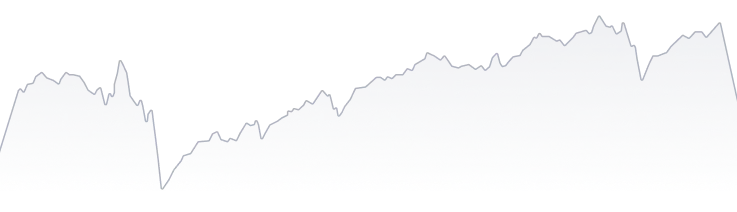
| Ώρα | Τιμή | Αλλαγή |
|---|---|---|
| Σήμερα | 0.00% | |
| 1 ημέρα | -R$1,923.21 (0.86%) | |
| 1 εβδομάδα | -R$9,841.87 (2.70%) | |
| 1 μήνας | -R$17,505.71 (4.46%) | |
| 1 έτος | -R$164,284.06 (29.37%) |
Κεφ. αγοράς
R$46.44B
Κατάταξη
#14
Όγκος 24Ω
R$472.66M
Κυκλοφορούσα προσφορά
116,499 WBTC
100% του συνόλου
Διαχρονικά υψηλό
R$676094.58
-69.62%
Διαχρονικά χαμηλό
R$10318.70
97.41%
Συνολική προσφορά
116,499 WBTC
Εξερευνητές
Προβολή
Λευκή Βίβλος
Προβολή
Ιστότοπος
Προβολή
Πηγαίος Κώδικας
Προβολή
WBTC
R$398,587.8
-0.69%
Wrapped Bitcoin (WBTC) is an asset-backed ERC20 token backed 1:1 by Bitcoin on the Ethereum blockchain. WBTC brings the liquidity of Bitcoin to the Ethereum ecosystem, including decentralised exchanges (DEXs) and financial applications. WBTC standardises Bitcoin to the ERC20 format, creating smart contracts for Bitcoin.
Wrapped Bitcoin was launched in January 2019 as a joint project by BitGo, Kyber Network, and Ren. BitGo serves as the original custodian of WBTC, while Kyber Network and Ren serve as merchants on the WBTC network, aiding in the minting and burning of WBTC tokens to maintain the 1:1 ratio of WBTC to BTC reserves.
Wrapped Bitcoin is created as a result of integrating BTC in the ERC20 standard through centralised custodian BitGo. Upon its creation, WBTC makes it possible for decentralised finance applications built on Ethereum to access BTC’s liquidity from the confines of this network. WBTC also makes it easier for Ethereum-based services to support Bitcoin transactions while making transactions faster, as Ethereum’s transaction-per-second speed outpaces Bitcoin’s
Wrapped Bitcoin’s main use is providing Bitcoin holders with access to DeFi applications such as lending, borrowing, and trading. Since Bitcoin per se can’t be used on DeFi solutions located in different blockchains, the act of swapping BTC into WBTC unlocks DeFi opportunities for its holders.
cryptoassets that may claim their value is linked to underlying assets (eg. BTC). As such cryptoassets may differ in how they seek to maintain stability, it is not possible to quantify all of the risks that may be associated with investing in such assets. However, there are some risks that will typically apply to these types of cryptoassets. Issuer risk: Issues around the transparency and auditability of the cryptoassets’ issuer and/or underlying assets such that you may not be able to adequately verify that the value of the underlying real-world assets matches your expected price of the relevant cryptoasset. Where the real-world assets underpinning such cryptoassets are not worth what the issuer claims, there is a risk that the value of such cryptoassets may fall below that which you expect. Where a type of cryptoasset provides a right of redemption over the issuer, this may not be exercisable for reasons including, but not limited to, the issuer becomes insolvent, there being insufficient assets, or market volatility. Algorithmic risk: Where a cryptoasset uses an algorithm to maintain stability, there is a risk that the algorithm could deviate from expected behaviour or fail entirely, causing the relevant cryptoasset to ‘depeg’ from its expected value / stability or even lose its value altogether.

Επενδύστε χωρίς άγχος

Κάντε συναλλαγές με μεγάλη ρευστότητα και χαμηλά τέλη